Premiere: R/D/V - Vaure [ONEINST027]
It is my pleasure to open the year with a track premiere by R/D/V and his forthcoming EP “Adrif” on the Berlin-based One Instrument label.
Luca Redivo is an Amsterdam-based Italian audio engineer and DJ/producer who goes by the alias R/D/V. Known for his inclination to introspective, driving and textural sound, Luca channels his energy into crafting hypnotic techno and ambient music. As part of his creative journey, R/D/V has recently released music via labels like [R]3volution, TMM and Analog Solutions, while also performing and taping podcasts for renowned organisations such as Tresor, Acquario, and Résilience.
We met some years ago at Operator radio in Rotterdam, where he was performing at the time. We had an instant connection and since then we have shared some musical inspirations and experiences throughout the years. Luca is one of the genuine upcoming artists in the Dutch music scene, charged with a lot of positivity and burning love for music and sound. When I saw that his upcoming release is on One Instrument - a label so unique like no other in our scene, I thought it was the perfect moment to sit down and have a chat about his life and work in sound and music, as well as the forthcoming EP “Adrif”, which we are premiering today. What started as a chat dedicated to the premiere, grew into a deeper exploration of sound and process, and I could not be more excited to share with you all our conversation. Sit back and enjoy!
Roots, Sound and Influences
“My name is Luca and I come from Milan, Italy. My passion for music started very early on. I wasn’t even aware of what was happening in the world at this point in life, but I was listening to a lot of different genres. I felt a connection with it right away. I used to play football, but stopped with that in order to study electronic music production and DJing. I went to a very serious school in Milan called Re.creative 12.0, with a 600 hours curriculum. I was 13-14 years old at the time. After high school, I moved to Amsterdam to study sound engineering at SAE, because I wanted to have a comprehensive understanding of what audio is. Some people think that sound and music are the same thing. They are definitely not. If you are a musician, you might not understand much of audio, and if you are an audio engineer you’re most likely not a musician. Now I am working for Paramount as a AV QC Specialist, and next to that I’m doing mixing, recording, mastering on the engineering side and I do acoustic treatment. My art is something that for me it’s not my job. It is something that I do because it is my way to respond to existence. I don’t believe in having a reason to live or so. We just have ways to respond to the stimuli we get from people, things, or stuff that happens. Music for me is exactly that.” What an introduction! Already in these first few minutes of our conversation, I am instantly drawn in and so impressed with Luca’s education in electronic music and sound engineering, as well as his view on music, art and life. It is incredible to see how someone who truly knew what their calling in life is, pursued it across borders encountering all kinds of hardship, to arrive at the point where in every aspect of their life sound is the centre point. Admirable approach and clearly strong perseverance. Luca goes on “I also worked at clubs like De School, Lofi and so on, but nowadays I am mostly working in my studio.”
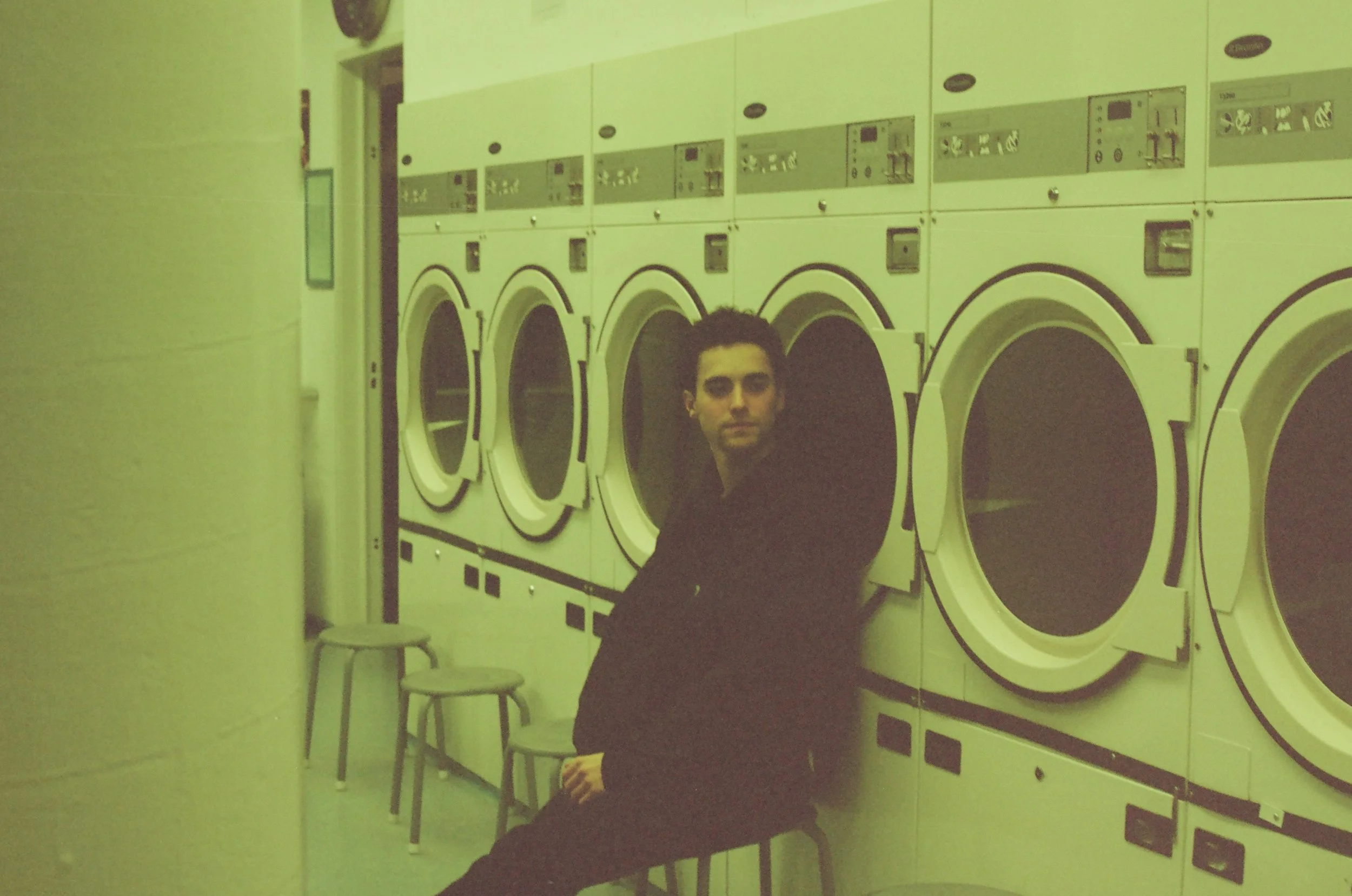
Luca Redivo artistically known as R/D/V
Circling back on the education aspect, obviously Luca does not know another way other than the one he learned through his years of studying, but surely there was a self-learning curve next to it especially due to his other type of work with mastering, and even his own art. I was curious whether he feels that going through a formal education on music production has an effect on his output and how he creates? Does he feel more in control in the studio maybe?
‘’I define myself as a technician. I'm not a musician, because I don't play instruments. I play machines and synthesizers and my modular. I love studying things. I'm a very ‘squared’ kind of person, even though I'm very open-minded to so many things, also artistically speaking. But you know, in life in general, I'm not a judgmental person. It's just that I'm genuinely interested in what other people do and how they do it, without having the urge to put a label on it. How this affects my music is, I think being very much on the technical side of things, and due to my profession, what I put out there sounds good. It maybe doesn't sound as creative as some something else that you might listen from somebody else.’’ But sound aesthetics is a complete other story than the technical aspect. Luca agrees and goes on to add ‘’I am very much eradicated in the essence and the core of things. Overly-structured or overly-produced music that comes out nowadays sounds the same to me. People don't synthesize stuff much and end up using the same samples. I try to step away from that all the time. I start from scratch every patch I have, and go head on. Like I don't necessarily get carried away by the details. For me, the track is the track.
In my opinion music in general, but especially the music I make, doesn't really need too much, especially if you're making techno. I create a very introspective sound, but at the same time it can be raw it can be like even a bit more sci-fi, hypnotic or textural sound. For me music has to be ‘down to the core’, and this philosophy is rooted in the ‘’Adrif’’ EP. It is a one take EP. I just played an instrument and made the tracks with it. It’s a monophonic machine, it’s not even stereo, but I see the core and essence. I want to make music like we used to make it 30 or 40 years ago.’’
I wonder if that means that Luca is generally inspired by the more old-school minimalist kind of techno? ‘’My passion is rooted with labels like Mental Disorder and Warm Up Recordings to name a few.’’ I nod in agreement as this aligns perfectly with the impression I had based on what I have heard from Luca’s sound. I always linked him to influences like Pole Group and the above-mentioned labels. Luca continues to share ‘’This kind of music stands above all else for me, because it’s minimal and raw, but at the same time it carries you away with all of its hypnotic and minimalistic sounds. It’s 5 to 10 elements but all the right ones.’’
Despite his main preference that lies in the minimalist raw sound aesthetic, the young artist often ventures into the deeper realms of techno too. He is capable of creating deep, flowy and softer musical experiences. I am curious to know about the other side of him ‘’That is true, between 2012 and 2017 I was deeper into a discovery of those sounds, and for me those were the golden years of hypnotic techno filled with incredible music by artists like Artefakt, Claudio PRC, Ness and the list goes on. I have even produced some remixes and collaborations that lean towards that deep side. I never know where I go when I make music, my ears guide me.’’ And your heart probably as well, I add. Following a certain emotion that drives the process. Luca continues ‘’Absolutely! I think when you develop your methodology for making music, you can try something different every time, but you also know what you can rely on. It can be on the engineering side of things, or your recording process or your monitoring, or even things on the creative side like programming your drums and then starting with patching the modular, followed by adding a drone or a pad or a texture. It’s also about where your studio ergonomics bring you and what they bring to the table at that stage. Everything we use when we make music influences not only how we use it, but also the ergonomics.’’
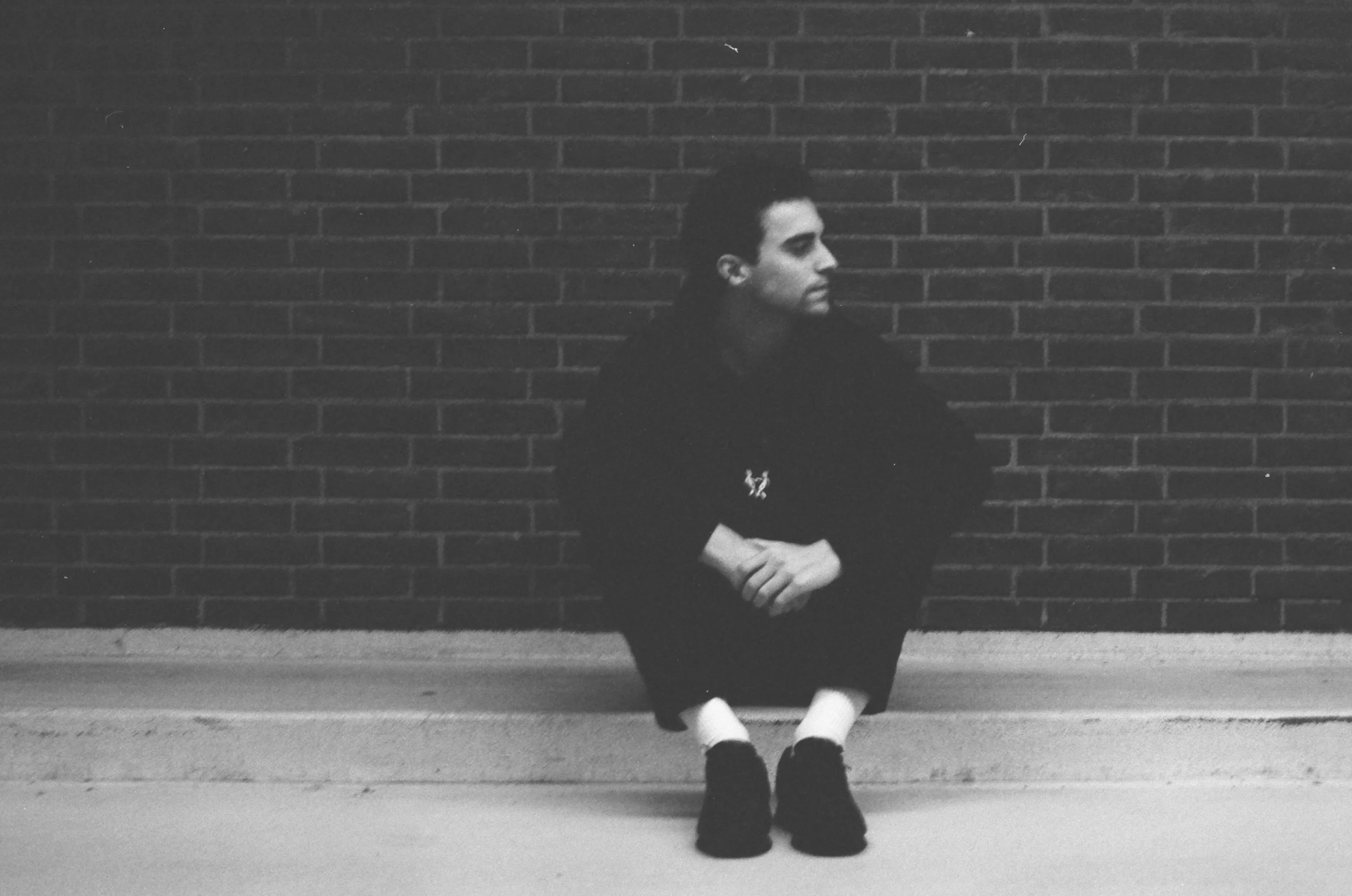
“I think when you develop your methodology for making music, you can try something different every time, but you also know what you can rely on. It can be on the engineering side of things, or your recording process or your monitoring, or even things on the creative side like programming your drums and then starting with patching the modular, followed by adding a drone or a pad or a texture. It’s also about where your studio ergonomics bring you and what they bring to the table at that stage.”
A deep-dive into R/D/V’s studio process, and the specifics of the Lyra 8
What an intriguing perspective! One that naturally leads me to ask more about Luca’s personal process in the studio. From the way he describes things, it’s clear he often works outside the box. And as he is someone with a deeply technical background, I’m curious how he balances that with his creative instincts. How does he actually approach making music? ‘’I definitely let the music find me. I don’t have a certain place where I want to go unless I am creating music for a specific project or label. I can break down my workflow into 4 different sessions.’’ Attention gear heads, this one is for you!
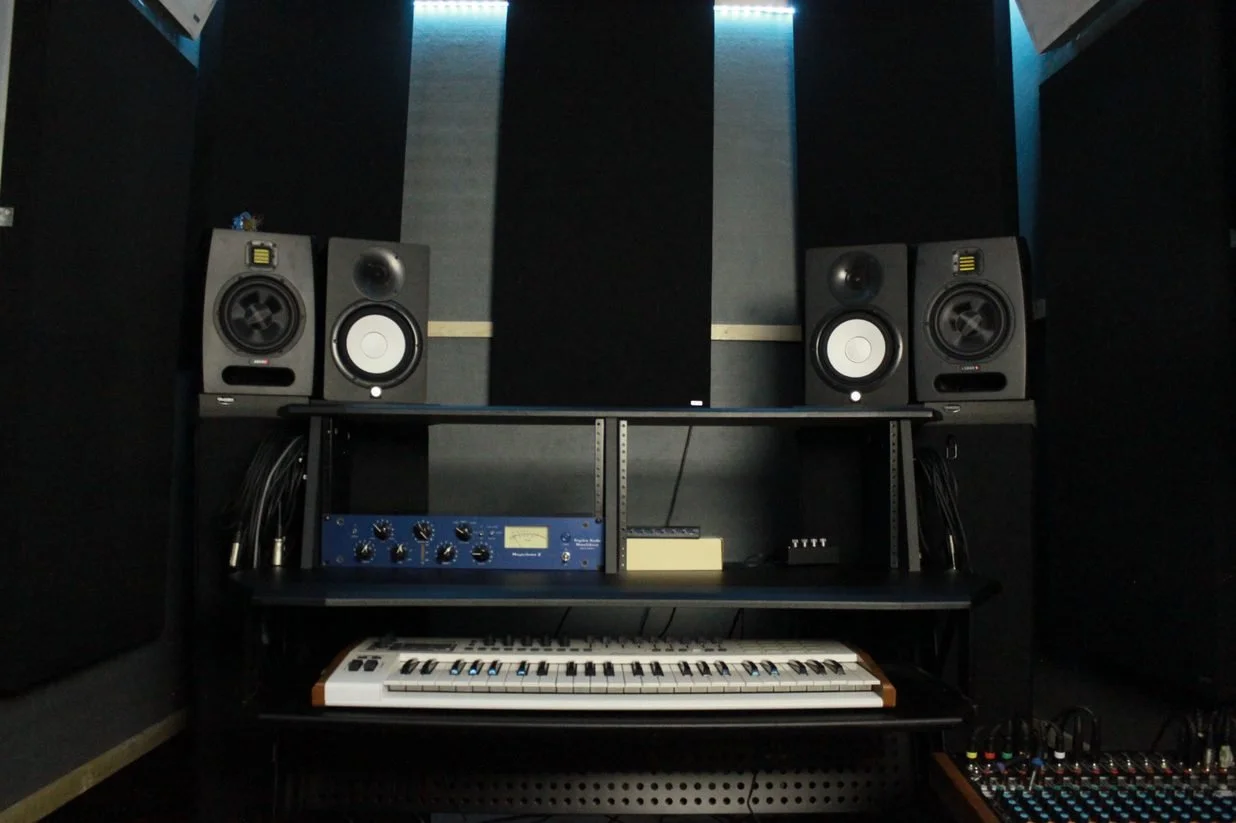
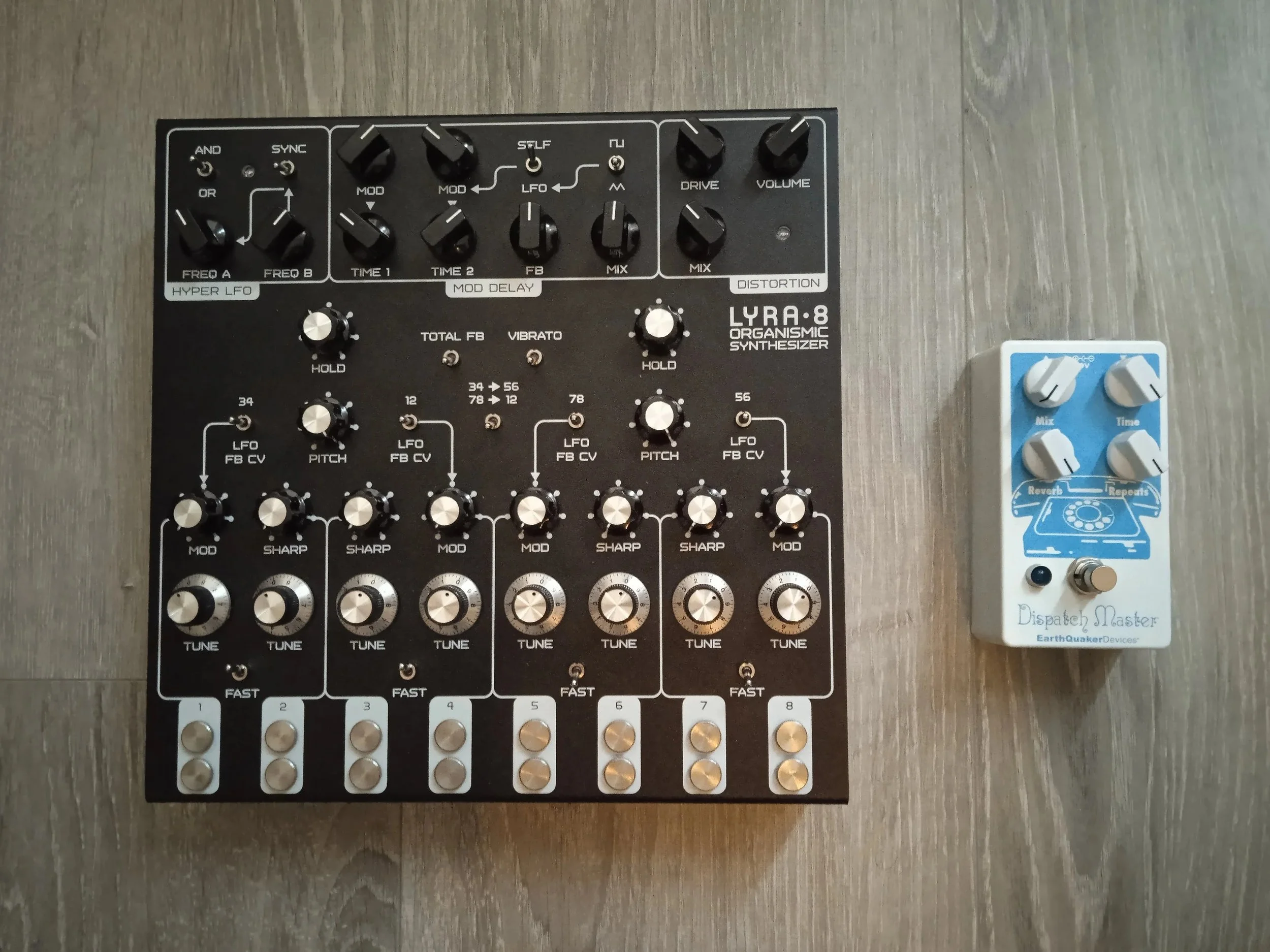
‘’I start with a recording session, followed by editing, then mixing and I finish with mastering if I have to master the music, which depends, because more often than not I prefer to have my music mastered by someone else in a different room. I usually work on multiple tracks at a time. Combining my work and focusing on different things helps me stay motivated and helps my creativity, because I am then not locked into one loop for too long. I have 2 Rolands at home, the boutique 808 and 909. Those classic sounds I usually push in the modular to give it some distortion, or I sample them. I have my Digitakt, which for me is one of the best machines ever made in terms of cadence, how it plays itself, the probabilities and algorithms. I think it’s beautiful. The textural part comes from my Lyra 8 or Reaktor. I also have my modular case, which is fairly big. It’s two cases actually.’’ I am curious to find out what his favourite module is? ‘’I think my favourite nowadays is the dual looping delay from 4ms. These guys made a crazy stereo delay that basically loops a line of feedback and creates all these nuances. You can change the timbre and cadence of things. Another one I love is Hermod, they call it a modular brain. It’s like a MIDI interface that also converts MIDI into CV/Gate, which is the language for using modular. You can basically clock your entire studio with just that. In general, there is a lot of intention in everything I do, and in how I use my machines.’’
That is quite the serious collection at Luca’s studio. I could see and feel the excitement and passion with which he tells me about every machine, like it is truly a special artifact that he collected and is using and cherishing with utmost care, pleasure and intention. Having gotten an idea about where and how the magic happens, it is time we went deeper into the story of ‘’Adrif’’ and more specifically the track we are premiering today ‘’Vaure’’.
‘‘The label started as a very simple idea. It grew out of a compositional exercise, limiting myself to one instrument as a way of going deeper into sound, focus and intention. Over time it became a platform for inviting other artists to explore that same constraint in their own way. It’s about getting closer to the instrument and delving as deeply as possible in it. ‘‘ - Aimée Portioli (Grand River)
For those of you who are not familiar, One Instrument is a Berlin-based label and conceptual platform exploring the sonic and compositional limits of minimalism. Founded by composer and sound artist Aimée Portioli artistically known as Grand River. She is a distinct presence in the realm of contemporary experimental and electroacoustic music, shaping immersive compositions that balance technical precision and skill with emotional depth. She works within a constellation of forward-thinking voices in this field, such as Caterina Barbieri, Abul Mogard, and Sara Persico, to name a few.
Her label invites artists to create music using only one instrument per release, a creative constraint that encourages deep listening, restraint, and innovation. Since its inception, One Instrument has become a playground for experimentation by many artists, especially due to the larger number of VA releases, and next to that artists like Donato Dozzy, Neel, Alessandro Canova, and Morning Seance to name a few, each offering their singular take on the project’s core principle with individual EPs. The result is a discography of focused, often meditative works that amplify the expressive potential of sound through limitation. Aimée shares about the label in her own words:
‘’The label started as a very simple idea. It grew out of a compositional exercise, limiting myself to one instrument as a way of going deeper into sound, focus and intention. Over time it became a platform for inviting other artists to explore that same constraint in their own way. It’s about getting closer to the instrument and delving as deeply as possible in it. The goal isn’t growth for its own sake, but to keep the label honest, focused and relevant to the way I intended it to be since the beginning.’’
I discovered the label when my partner gifted me a record when I was still living in Berlin about 5 years ago. It was the ‘One Instrument Volume 01’ VA featuring Korridor, Wanderwelle, Claudio PRC and Fjäder to name a few. I was in awe of the concept and the way it pushes creativity to new territory. Since then I have followed its development, and I am glad that today I can sit with an artist who could share his unique ‘One Instrument experience’. I wanted to know how the release came about. Did Luca first make the music and then felt like it connects to this concept, or he specifically went into producing with an intention to create something for it? Lastly, why did he choose the Lyra 8?
‘’I bought this instrument a few years back. I’ve used it in some studios before, but when I actually got my hands on it for the first time, I understood the full potential it has and I wanted to bring it to the world in some way. My idea was to create a live set with it, and the EP emerged from that. Additionally, my good friend Elisa Batti had already released on the label and had an amazing experience, so she introduced me to Aimée and we talked about the concept. For me it is very special, because you are not playing an ecosystem of different machines. This is almost like a cello concert, where you just have that one instrument. The Lyra is of course a different take on that idea, but it’s also a very powerful instrument. I recorded so much when practicing with it, and I ended up with a lot of cool material that I wanted to share with the world at some point. I have used the Lyra in my studio ecosystem, which is also great, but when you take things apart and focus on one thing only, something more powerful happens. You experience all the nuances and all little things that happen when you play.’’
The experience of creating with only one instrument and the importance of silence and dynamics
I find that fascinating. In a way, for some in electronic music playing just one machine can feel limiting, but what I am hearing from Luca is the opposite. It seems like this approach has opened up a whole other world for him that led him to this beautiful drony composition. He even took it a step further: it is not just one instrument, but it is also one take. Luca nods in excitement and goes on to share:
‘’When you want to release on this label, you really have to do your research. They have specific guidelines for the EPs. They're public, actually, so anyone can look them up. It’s not a long list, but for example, on this release I was only allowed to use reverb.
You can build a piece with multiple takes like layering different recordings of the Lyra and constructing a track from that. Maybe you make some sounds first, then add more later. But for me, that approach didn’t feel right. I could’ve sat with the Lyra for hours and stacked all sorts of interesting sounds, but that would’ve created too much structure for the way I like to work. And not in the sense that I don’t like structure or don’t have a professional approach, but more that it would’ve been overly-constructed. I felt this project needed to go to the core of something, not away from it.
So, my idea was: I’m going to do one track. That’s how I want to play the instrument. I want it to sound the way I intend, in one go to keep the interaction direct and controlled. I’d rather stay inside that little frame than start duplicating it for the sake of layering. That just feels redundant.’’ I can relate to that from an artistic point of view. Going to the core of something actually means removing all distractions and all possible worlds and choices, so that you can experience the depth of one specific thing. ‘Less is more’ is kind of a powerful approach at that moment. With young producers it can also sometimes happen that they stack their studio with all these machines that they are so excited about working with, but in the end, they try one and move on to the next one without reaching that depth and ultimately, they remain on the surface of things missing on the full potential.
“I agree. It is also the reason why I gravitated towards the idea of performing with just one instrument, and I play it in my own way, just as someone else plays it in theirs. It comes back to something we spoke about earlier: ergonomics, and how you physically relate to an instrument, how you interact with it. When I play the Lyra, I feel deeply satisfied, because it sounds exactly how I want it to sound. There’s a moment where I realise: this is it.
‘’Silence is extremely important to me. Dynamics are everything.’’
With a sampler, you can’t quite reach that level of control. You can shape things to an extent, but you don’t really have silence unless nothing is playing at all.’’ I am triggered to ask if silence is important to Luca?
‘’Silence is extremely important to me. Dynamics are everything. The interesting thing is that we have never truly experienced silence. Even before we are born, we hear sounds. Our ears are not accustomed to silence at all. That’s why anechoic chambers are so powerful. You start hearing your own body, your intestines, your internal vibrations. It’s intense. There’s no pressure, no air movement, something completely outside our everyday reality. We are, after all, bodies in constant vibration.’’
I personally don’t deal easily with silence in daily life, but over the years I’ve learned to understand it better, especially within music. At first, silence felt uncomfortable to me. When you get into music through high-impact genres, it can feel like disruption of the flow. But as I started listening to ambient, experimental, and drone music, I began to understand its value. Silence gives weight to sound. It shapes how we perceive music and makes moments more powerful; I shared with Luca.
‘’If you think about it historically, classical music, which is basically the first commercially produced genre, is also the one with the most dynamics. Dynamics aren’t just about volume, they’re about perception. Psychoacoustically, low frequencies feel heavy and sustained, while higher frequencies feel faster and more fleeting. Every creature perceives sound differently. That was a real revelation for me. You don’t hear the world the same way I do. Nature is endlessly complex.’’ Having mentioned nature, I feel the need to sidestep and ask whether nature plays an important role in Luca’s life, creative work and inspirations?
‘’For me, nature and energy are central, almost spiritual forces, they are something like my God. They form how I live and how I create. Everything is an interaction of energy: between people, objects, sound, and intention. When I work on more conceptual music, I recall that in my experience a lot, because as you mentioned before, people’s first encounter is often through physical feedback like movement, dancing or impact. That deviates a lot from conceptual music made for the mind and soul. I don’t deny how great the physical side of things is, but as a producer I want to elevate music to something more experimental, mental or even more intellectual of an experience.’’
The intergalactic journey ‘’Adrif’’ and the story behind it
I had to think back to the first time that I heard the ‘’Adrif’’ release. As a fan of experimental music, I felt an instant connection with it. The track that I selected to premiere today ‘’Vaure’’ has such an interesting progression, and thinking about the entire context in which it has been created and the story behind it, it felt deeply personal and captivating. According to Aimée, the label owner ‘’Vaure is rendered through unstable, eruptive gestures, volatile surges and scorched textures that never settle.’’ This vivid description naturally opens the door to the question about the story behind the EP and what goes deep down in Luca’s imagination.
‘’The idea started from the instrument itself. The machine can sound very sci‑fi that’s what it’s built for actually, but it can also sound very earthly. That contrast really stayed with me. I began thinking about how to frame it conceptually, how to build a world around those possibilities. What I ended up with was a story that feels semi‑known to us. It’s imagined from a future perspective from humanity in 2026, where there are things we understand and things we don’t. The idea was to take the listener outside our galaxy, into another one altogether.
R/D/V - Adrif [ONEINST027]
Release Date: 6th March 2026
AVAILABLE FOR PRE-ORDER HERE
-
Galaxy
Aos is a sprawling network of stars, nebulae and dust. Each area varies in conditions, from the stark cold of remote voids, to the energetic chaos of young star-forming regions. In its heart lies a great cosmic upheaval, while the remnants of supernovae and black holes shape the surroundings. Much of Aos remains unknown. It presents vast and desolate stretches between the vibrant nebulae and the scattered fleeting clusters of stars. The galaxy has witnessed countless cycles of birth and decay, its ample scale holds mysteries far beyond our comprehension. Though the Ruan system represents a mere fragment of Aos' infinite expanse, it is shaped by the same forces that have formed the rest of the galaxy: time, decay, and the inexorable march of cosmic change.
Solar SystemRuan is a harsh and unforgiving solar system where each globe is under the influence of the weak and distant rays of Aryl. Only Elistra, a fragile world, manages to maintain a delicate equilibrium, while all the other planets are inhospitable and exhibit extreme challenges for any form of conscious existence.
Star
Aryl is an ancient star at the heart of the Ruan system. Born from a far-off nimbus, it has since cooled and dimmed, now radiating a faint amber glow. In the twilight of its lifecycle,
Aryl’s energy is barely sufficient to sustain the most fragile ecosystems on its orbiting celestial corps. The star serves as a symbol of the relentless passage of time and quiet yet inevitable decline.
-
Average Orbit Distance from Aryl: 1.6 AU Vaure is a world in continuous turmoil and molded by ongoing volcanic eruptions. The atmosphere is thick with sulfur and ash, making it impossible for simplest life forms to endure. Rivers of lava carve jagged landscapes and constantly alter the planet’s terrain. The ever-changing and fiery environs make Vaure one of the most hostile globes in Ruan.
-
Average Orbit Distance from Aryl: 3.7 AU Elistra is a lush and temperate celestial body, home to delicate nature. The unknown inhabitants aperiodically live in harmony with their surroundings, but they are always under threat from natural disasters and external factors. Despite its beauty, Elistra's biomes are in perpetual flux and struggling against their instability.
-
ItemAverage Orbit Distance from Aryl: 6.1 AU Tar is a rocky sphere, continuously remodelled by seismic activity. This satellite is in a state of ceaseless motion as tectonic plates shift and reinvent its face. Volcanic eruptions and earthquakes are frequent, making the environment uneasy. Tar’s soil remains in fluxion, defined by its rugged, dynamic geology. description
-
Average Orbit Distance from Aryl: 9.8 AU Nali is a gas giant covered by glowing bioluminescent oceans and dense mist, giving it an eerie and majestic appearance. Below its bright edge, microbial life forms exist deep beneath the waters, as they managed to outlast the unkind habitat throughout cycles. Nali’s surface is a turbulent sea of swirling gases with incessant fluctuations in temperature and humidity.
-
Average Orbit Distance from Aryl: 10.4 AU Kaltho is a frozen satellite locked in eternal winter, its shallow is entirely covered by glaciers. The planet's unbreathable ambience and frigid climate make it a forsaken wasteland. The ice expands endlessly across its surface, Kaltho’s a silent and desolate realm and its harsh surroundings remain the most extreme within Ruan.
So, I imagined a solar system with stars and a set of planets. Each track represents the ambience of a different planet. That became the foundation. Every track had a narrative role, and I thought about how each one should feel within that larger structure.
There’s one exception: Elistra. It’s the only track with a clear rhythmic pulse, and that’s how we know there is conscious life on this planet. Something we recognize instinctively through the elements of the track. The others are more atonal, more abstract, without rhythm. That’s music I’ve always been drawn to, a sound that exists without obvious momentum. That’s essentially how the concept took shape: developing a story directly from the material I had, and letting the instrument guide the world it wanted to create.’’ Even before reading the concept that Luca wrote out, just hearing the music I felt like I was on an intergalactic journey! It’s nice to hear that my feeling and interpretation of the music matched what the artist had in mind when creating. Another question kind of emerged in my mind while I was listening to him explain the concept, and it is whether Luca is actually a visual person? With such a technical and rational mind, sometimes the visual aspect could be more in the background, but the story is so vivid that it made me think that there is something deeper there. Luca shares:
‘’During the recording process I did envision how each planet would look like in a very detailed way. I almost felt like I was there myself, but I restrained myself from going deeper in explaining the concept in order to leave some mystery for the listeners. I did not want to break it down so much because it is a matter of the known and the unknown, and your perception of things. I wanted to leave it up to people to imagine where they are taken.’’ I think after this build up it is only fair to let our readers check the full story for themselves, I have made it available above.
A look towards the future
We are approaching the end of our conversation and I am in awe of the depth that Luca has in terms of knowledge, but also as a person. He is such a kind-hearted and eloquent artist, who thinks deeply about sound and music and can always trigger you to join him in that realm to share a piece of his philosophy and of himself. ‘’I consider myself just a guy who is doing what he loves to do, and can talk about these things endlessly. Despite my young age, I have been working in this field for half my life, and I am not saying this to brag, but to illustrate that it all comes with a background. I was born in 1999 and read about raves more in books and publications than experiencing them, but that never stopped me from loving sound and going deeper and deeper in it.’’ It has always fascinated me how one is capable of creating something, which thrives perfectly in an environment that they have never or rarely been in to even understand how it translates. Overall, I sympathise with his approach, especially nowadays, it could be few music experiences per year, but all the right ones! Luca laughs and agrees with me, as he warmly remembers that one of those few experiences as of late has been Monument festival this summer where we enjoyed and danced side by side.
Lastly, looking towards the future, I was curious what lies ahead for R/D/V? ‘’After this release, which I am very excited about, I have a few more great things coming. I am not at liberty to say specifically at the moment, but it’s a mix of collaborations, remixes and some gigs.’’ One of those gigs is actually already announced, so for those of you who are in Amsterdam or around mark your calendars and join Orphic on Saturday February 28th where you can hear a DJ set by R/D/V. I am glad to hear that the months ahead are looking bright for the young artist, and until then let us focus on this marvellous experimental release coming up on the special One Instrument label. Press play and enjoy the premiere track, and don’t forget to support the label and the artist.