From Underground Beginnings to Global Recognition: The Ever-Evolving Story of Samurai Music
The rhythm of the electronic music world rarely slows down. Across continents and scenes, artists, organisations, festivals, clubs, and an ongoing stream of remarkable releases from labels across the spectrum continue to shape today’s musical landscape from experimental niches to global stages. A new season is about to unfold before us, bringing with itself new perspectives, a shift in energy, and new stories. One of my highlights from the end of 2025 is meeting and interviewing Geoff Wright, artistically known as Presha – the man behind Samurai Music Group, which I am happy to share today as the first in-depth feature of this year.
I’ve been a fan of Samurai and its associated sub-labels for years. I first discovered it back in my time in Berlin, when I picked up my first Samurai record in Spacehall. Ever since, I have collected, followed and supported the label with deep admiration. Naturally, I wanted to invite Geoff for an in-depth conversation to get to know him better, understand who is the person behind this special label that has influenced me and so many others in a substantial way when it comes to music discovery and expansion of the musical universe.
Founded in 2007, Samurai Music has become a landmark imprint in the world of deep, forward-thinking electronic music. What started as a DnB label quickly evolved into something much more expansive, with sublabels like Red Seal and Horo pushing into ambient, techno, and experimental territory. The label has continually evolved while staying unmistakably itself and shaping the underground for 18 years.
Through this conversation, I trace Geoff’s personal and artistic journey from the early metal days in New Zealand to forming a new sonic identity in Berlin. We reflect on community, growth, and sound as a tool for personal transformation. We explore identity, curatorship, creative integrity and renewal: times of doubt, artists, records and moments that defined the journey so far. This is more than just a label retrospective - it’s a portrait of Samurai Music as it steps into its next chapter.
The early years of Presha, growing up in New Zealand and the subculture chapters
‘’I grew up in a really small town, and there wasn't much to do there, and I was the youngest of five children by about six years between me and my next sister, so I was a lot of the times on my own and disconnected from my family, because they were older than me. From an early age, I developed an instinct of individuality. I guess that gave birth to what I have become later in life with music.
I discovered music by my brothers and sisters, of course, like everyone does. A big mixture of music poured into me. One of my brothers was highly artistic and talented. At first, he was a gymnast, and then he went on to become a modern dancer. He exposed me to a wide range of cultural influences. On the other hand, my oldest brother was really into heavy rock. This just goes to show the crazy mixture of music that I mentioned. From then on, I kept this passion for music.
Skateboarding came into my life when I was about 9 or 10 years old, and that swallowed up all my time. Eventually skateboarding morphed into another connection with music, because it intercepted with the birth of punk, rock and then American hardcore, which became intrinsic to the culture of skateboarding. In the mid 80’s when skateboarding started dying out there weren't many of us left in New Zealand still doing it for many years, but we were a solid crew. Some of us were into music, and that connected us. It was hardcore music, but it was a continuation of the passion we had for skateboarding and embellished the energy.
I started going to clubs far too young and became friends with a lot of DJs. At the time, it was all hip hop and house. I ended up living with one of New Zealand’s most legendary DJ’s, like one of the originators who had turntables in the house. He’d mix constantly, and I was fascinated, but I stayed a spectator at first. I kept interested in clubbing, and I used to go and listen to House Music quite a lot. Then I went to live in England for two and a half, three years, then back to New Zealand and dove straight into the life of being in a thrash metal band and getting to warm up for Metallica.’’
What an introduction! Geoff immediately strikes me as a very multifaceted person with a rich life experience. I am instantly drawn in, and more than anything at this point I want to know everything about that Metallica gig. Not many of you know, but my roots in music link back to metal and rock music, and Metallica is one of those ‘’forever bands’’ that will always have a piece of my heart. Hearing that Geoff got to warm up for them in concert makes my heart skip with excitement and curiosity. He smiles and starts sharing the precious memory:
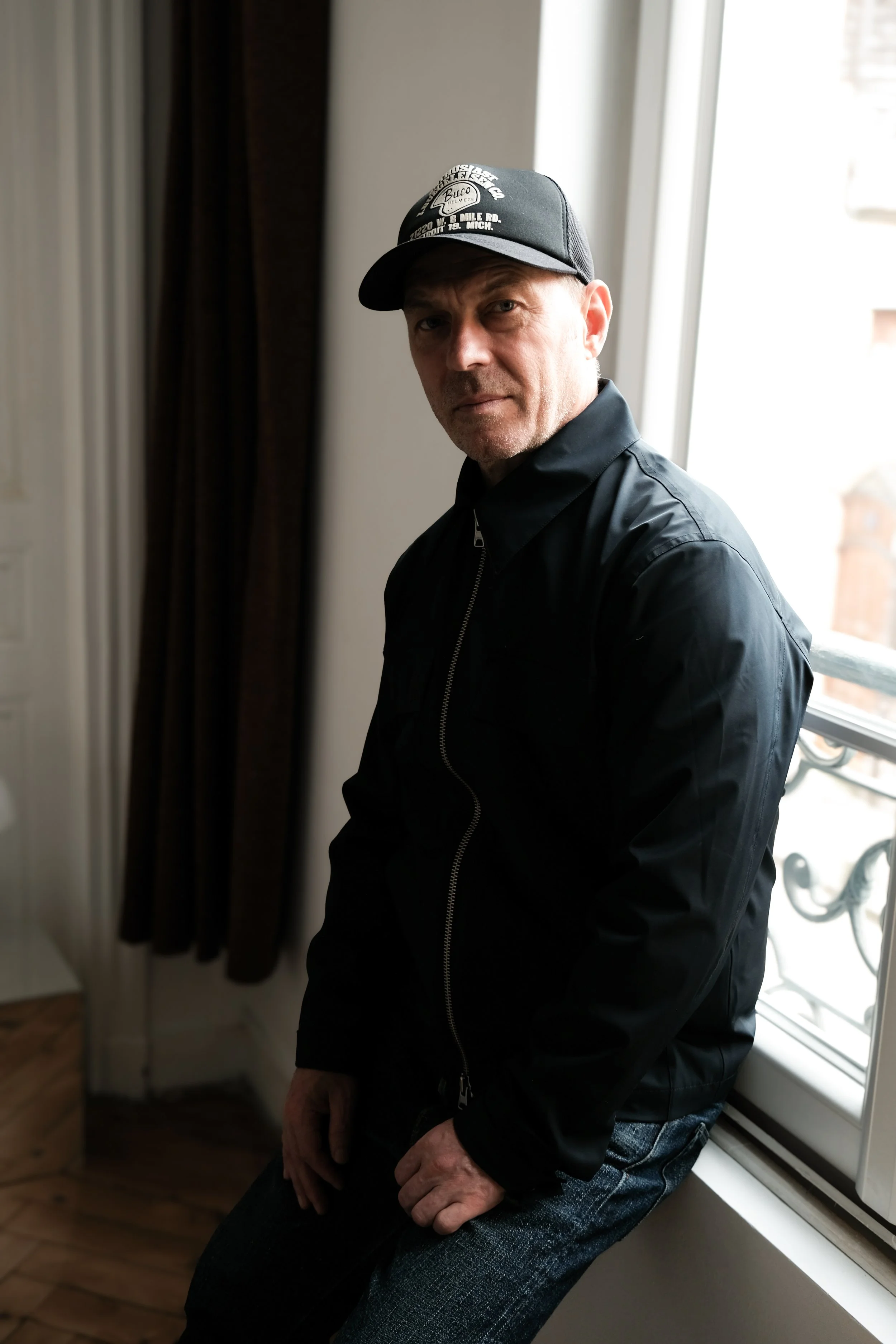
Geoff Wright, artistically known as Presha. Photography by Claire Breilly, 2025
‘’It was really crazy, and especially because it's again all about this connection. I was sponsored as a skateboarder in 1986 and went to the U.S. on a tour. When I was there, I went to see Metallica live, and quite a few more bands. It was an exciting period for thrash metal. I went home with a bunch of records and started hosting a radio show on a student station in New Zealand, which is how I met the guys who later invited me to join their band.
I didn't know anything about singing or being in a band, but I thought I'd give it a go, and it actually worked out really well. We had about a 2,5 – 3-year run. There was touring and we gained quite a big following. We were in a way New Zealand's first trash metal band, so we got the support slot for Metallica’s concert. Just as we got this gig our band started falling apart. because leading up to it was tense and one member got mixed up with drugs and was drinking a lot, whom we ended up firing from the band. The pressure of playing before Metallica basically split us up.
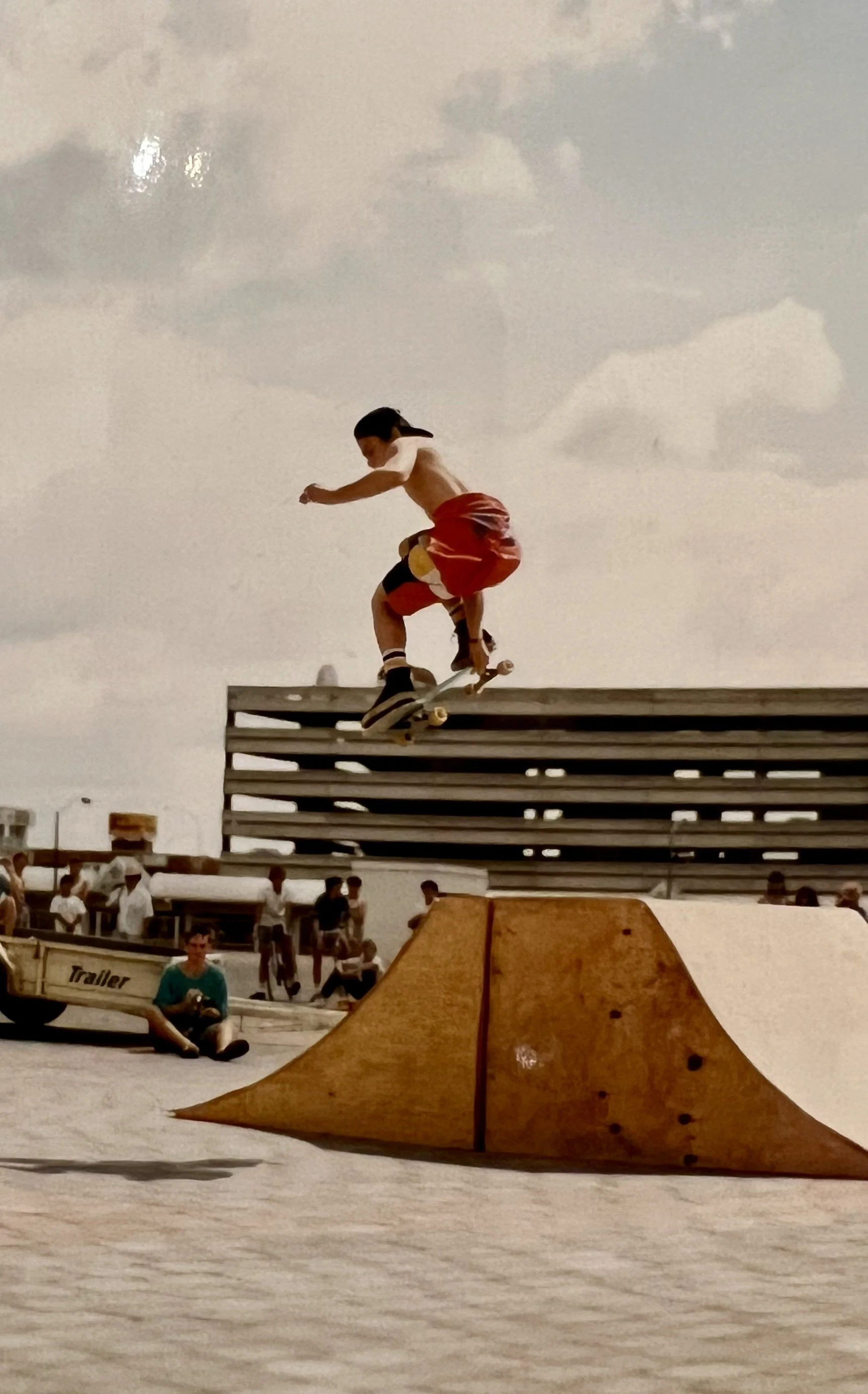
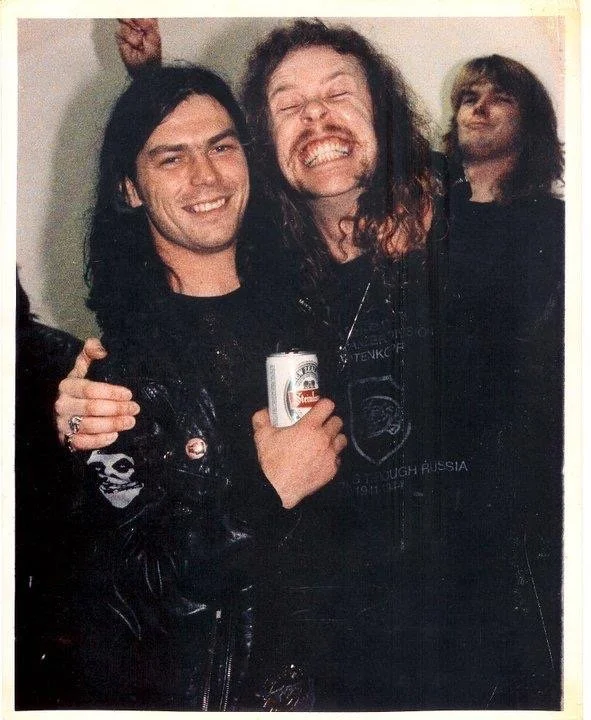
It was quite stressful because there is a big difference between playing for a small to medium crowd and suddenly having a 5000-person crowd, and you're playing before Metallica. It's just a really big leap, you know? I think it became a bit unreal for us, and it put a lot of strain because we wanted to be the absolute best.’’ As you grow in popularity as an artist, it is not to say that you always fully realize the magnitude of your growth. You are mostly focused on your craft, and sometimes when a new larger moment is upon you, it can be in fact a challenge to be overcome instead of only a joy to be celebrated. I am curious how it went for them from that point onwards and if the show still went through despite losing a member?
‘’Yeah we did, but I became the bad guy, because I was the one that didn’t want to be in a band with someone that's going in this direction. I just wanted him to stop and take the band seriously as we all did at the time. He's such a lovely guy though, and we're really good friends now. Anyway, we went ahead and did the gig, and he ended up playing in the end. Oh man, what an experience it was!’’ I am glad to hear that they managed to overcome this as a band. It is those experiences that help so much to grow and gain new perspectives and learn how to communicate and navigate art and life. The final piece of the Metallica puzzle would be if they actually managed to meet the living legend James Hetfield.
‘’We had a small dressing room backstage, but it was lacking some drinks, to which we kind of complained. Suddenly, James and Jason Newstead turned up with a bunch of beers for us! They sat down and just drank with us.’’ Once in a lifetime experience with the legends! ‘’So then it was time to do the show, the other guys in the band went out onto the stage, and people were chanting our band name. I was in the back just frozen, too scared to go and do what I had to do. James just put his foot on my ass and pushed me out.’’ A kick you’ll never forget.
‘’It was epic. Once I was on stage, I couldn’t see much, it was just blackness past the front rows, which weirdly helped. I said the F-word way too much, but it was just nerves spilling out. I don’t normally swear that much. Still, it went very well. At the end of our set, we did some cover versions, and I looked over and saw Kirk and James on the side of the stage air-guitaring. It was unreal.’’ What a moment indeed! My initial impression of a multifaceted path has now started to unfold before me, and each chapter - family influences, subcultures, sound discoveries left a trace, shaping the sensibility that now defines Presha’s work. I wonder if he can trace back these influences to how his creativity has shaped later in life?
From thrash metal to turntables, transitioning into electronic music and the 90s scene
‘’Well, absolutely. I think the experience with Anigma (my band) really shaped me, because even though we had a manager, I had to take on a bit of a leadership role. I had to push things in certain directions, and that experience ended up shaping how I approach running labels later on. It gave me a sense of what needed to be done and how to do it.’’ I nod in understanding with a smile on my face and Geoff goes on:
‘’When I went to live in the UK, I was deep into rock music, so I went to loads of rock gigs, and worked at HMV in Oxford Circus for two years. Around 1992 the rave scene started to take off. We were rock guys, but we used to try and go out as late as we could all weekend. The only places we could go late were acid house raves at 7 am. That’s where I first started hearing that kind of rave techno, and jungle, but I didn't really understand it then. After two years, I moved back to New Zealand and started running a bar.’’
Working at a music store where he can learn more about the commercial side of music, and being in the thick of the birth of a new groundbreaking culture and musical movement as a vivid participant sounds like the perfect recipe for a new passion. The 90s rave scene in the UK is mainly characterized by genres like Drum & Bass, Jungle, Hardcore, and Acid House. This movement gave way to a generation of artists and labels that shaped electronic music as we know it today, one of which I am speaking to today. I circle back to our conversation eager to hear about the next chapter back in New Zealand and the start of his DJ career.
‘’I had this connection to playing music. I was even DJing rock music in the bar, basically, haha and then I got a job just playing CDs in a bar in Christchurch, of all places. Later I started working at a record shop, and that’s where I really discovered and embraced jungle and drum and bass, right around the time I bought my first set of decks. I taught myself to mix and landed a Saturday night residency. I played open to close starting with house, easing into techno and harder acid techno, then ending with jungle. That was my real entry into DJing. At the same time, my ex partner worked for Polygram, the label that released Goldie’s album in New Zealand. I started organizing release parties - for example for LTJ Bukem’s Logical Progression compilation and the Goldie LP, and from there, I got booked to play jungle and techno gigs. That pushed me into promoting. We started doing our own nights in Christchurch.’’
‘‘Getting records over here was tough, so I started just ringing up people in the UK and going ‘Hey, can I buy a bunch of records off here? I need to bring them over to New Zealand to sell them.’ It turned into a small distro business, and with it came connections with DJs and labels to the point that I started receiving unreleased music that I felt deserved to come out, and I realized ‘It’s time to launch a label!’’
That’s so cool. For those unfamiliar, LTJ Bukem’s seminal ‘Logical Progression’ compilation helped define the sound of atmospheric drum and bass in the mid-90s fusing crisp breakbeats with lush pads and jazz-inflected melodies, it marked a pivotal moment for the genre. For me, a similar sound experience was found in the discovery of Kruder & Dorfmeister, whom I love dearly to this day. It sounds like Geoff dove headfirst into the music world from every possible angle - working in record shops and labels, distribution, promoting, launching his own label, and making music himself. It feels like such a natural evolution. I couldn’t help but wonder, was that the turning point where electronic music fully took over?
‘’Pretty much! Promoting led me to meet a guy, and together we formed a promotions company. Getting records over here was tough, so I started just ringing up people in the UK and going ‘Hey, can I buy a bunch of records off here? I need to bring them over to New Zealand to sell them.’ It turned into a small distro business, and with it came connections with DJs and labels to the point that I started receiving unreleased music that I felt deserved to come out, and I realized ‘It’s time to launch a label!’ ‘’
I’m in awe that so much happened in just the span of the 90s and we’re only getting started. That decade held a unique underground energy across the globe, but I’m especially curious what it felt like in a place as geographically distant as New Zealand. Geoff had already mentioned the hurdles like limited access to records, and distance from the industry’s pulse, but maybe that’s exactly what made the scene feel more raw and sincere? Every time I speak with artists from places outside the usual industry hubs, I’m reminded of just how much that scarcity fuels depth. Artists like Presha, who are building something from scarcity, always struck me as the true diggers. I asked him what the scene was like back then and what, if anything, still remains today. Geoff goes on to share:
“Back then - wow. New Zealand was something else. I can’t really compare it to other countries, since I hadn’t spent much time abroad, but even with the limited access to music and DJs, the passion was incredibly strong and, like you said, really pure. It’s hard to explain what a gig felt like in ’96 or ’97 without the internet. We used to fly in DJs like Grooverider, Doc Scott, Kemistry & Storm, and suddenly you’d have 800 people in a room most of whom had only ever heard this music through a friend’s tape or a rare radio mix. There was no streaming, no YouTube. When people experienced it, it was a total discovery - raw and in the moment.” For context, Geoff was flying in drum & bass pioneers and visionaries at a time when the genre was still under the radar, and discovering such artists without having the luxury of the internet took serious effort. That kind of raw, in-the-moment energy feels rare today, yet it’s exactly what many underground communities are working hard to revive: stripped-back, device-free experiences rooted in pure sonic discovery.
‘‘People talk about community now, but back then, without the internet, connection through electronic music happened almost exclusively in the club. You experienced something powerful together, and it created a real bond. Even today, I meet people who say, ‘I was at that gig’, and instantly, we’re connected. It’s hard to explain that intensity to anyone who wasn’t there.’’
‘’People talk about community now, but back then, without the internet, connection through electronic music happened almost exclusively in the club. You experienced something powerful together, and it created a real bond. Even today, I meet people who say, ‘I was at that gig’, and instantly, we’re connected. It’s hard to explain that intensity to anyone who wasn’t there. The house and techno scene was incredible then big names coming through, huge parties. In the beginning, around ’95 - ’97, it was a proper community. Promoters were friends, we supported each other’s events. It was warm, open, and passionate. Eventually, it splintered everyone stuck to their own genres. We were more drawn to what you might call “niche” sounds at the time artists like Goldie, Doc Scott, Kemistry & Storm. We didn’t lean into Jungle as much which brought some criticism. We felt the emerging growth of Drum and Bass was more future facing and what we wanted to promote. But I’m proud of how we helped shape the scene to appreciate more, I wouldn't say Cerebral music, but it was less, less impact based and more about a journey. There were the drum and bass and the jungle, and we were firmly on the D&B, and the New Zealanders were just so passionate about it, so we had such a big support for many years.’’ Geoff continues:
‘’I'm not really qualified to speak on the current scene there, since I haven’t lived there for over a decade. But one of the reasons I stepped away was the impact of the whole EDM wave. It just blew up everything. Promoters shifted focus because that’s what people wanted, and fair enough, but it felt like an atom bomb hit the scene. Suddenly, no one cared about anything that wasn’t high-impact, all night long. And that didn’t interest me.’’
It’s a familiar pattern we’ve seen unfold globally. As EDM surged into the mainstream, it unlocked new possibilities: careers, revenue, mass appeal, but often at the expense of substance. Music became a product, stripped of risk and nuance, now meant for consumption. That shift from art as expression to art as commodity left behind the kind of pure, local energy Geoff described. Yet across the ‘underground’, small, committed communities still hold the line. As promoters, curators, and artists, it’s up to us to keep nurturing these deeper spaces where music and art can once again be an expression above all.
‘‘Doing this kind of work, you're always going against the tide. But right now, I’m inspired by what I see. Many artists begin with real intent, and that’s when they make their most interesting contributions.’’
‘’Yeah. I mean, doing this kind of work, you're always going against the tide. But right now, I’m inspired by what I see. Many artists begin with real intent, and that’s when they make their most interesting contributions. But I’d say 60 - 70% eventually get… well, ‘corrupted’ sorry for the negative word, but they face a choice: either keep doing what they love, or make a living from it, which often means compromising. I'm inspired by people who stick around and do it. I guess I've had my moments where I've given into it, but I'm inspired by people who stay in that kind of intense love phase with what they do before they get corrupted by it being a career. You know?’’
I nod in recognition, touched by that all-too-familiar ache in Geoff’s words. What stayed with me, though, was his admission of compromise. Samurai is more than a label - it’s a world of its own, shaped over 18 years and multiple imprints. Naturally, any journey that long has its share of highs and lows, chapters one might cherish, others best forgotten, and those that leave behind lessons.
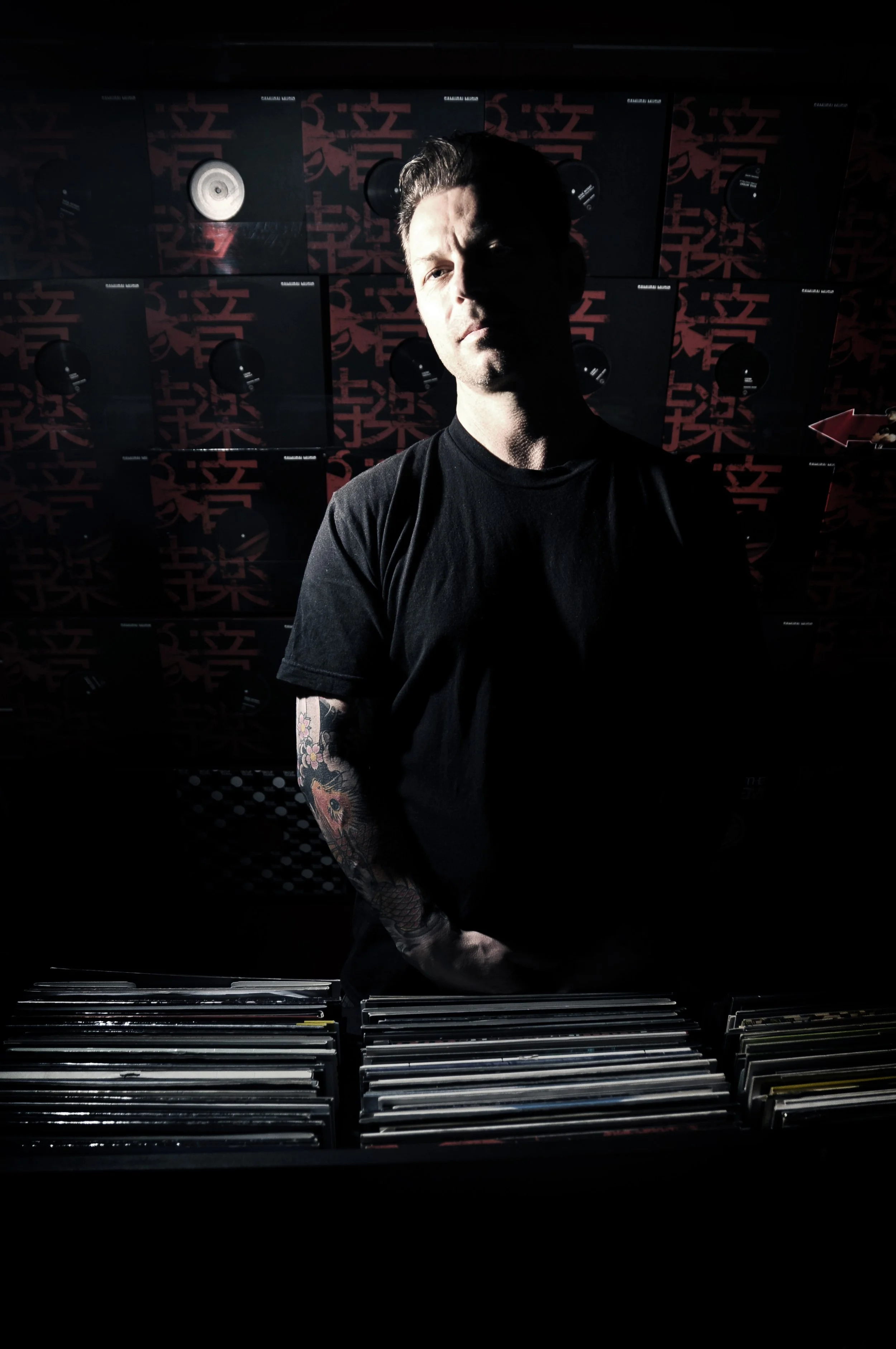
Presha in 2009 at his record store.
The early years of Samurai, Red Seal and carving a sound niche with intention and depth
Yet one thing has remained constant - the unbroken red thread of quality and vision across everything Samurai stands for. I wanted to know what did compromise look like for him in those moments? And how did he still manage to hold the course, delivering so much, for so long, without ever letting go of the heart of it?
‘’If you look at the early Samurai records, that was me giving into the impact-driven sound a bit. I started the label around the time Pendulum was blowing up. But even then, my pitch to artists was always: ‘I want to hear stuff that's different to what you would do for any other label’. That’s how I got tracks from people like Klute and Calibre. I was always asking the guys about the stuff that the majority of people weren't so interested in, and I watched the deeper sound develop. I just always wanted to go with it. That's why in the beginning I created the Red Seal. I would still put out more dancefloor records, because I've always gone to clubs, and I like dancefloor records, and I understand them. So across all my labels, I’ve always maintained those two tiers - my vision of the dancefloor, and the deeper territory I keep returning to.
Over the years, I’ve tried not to follow trends but to observe them. There’s usually a peak, then a decline, and that’s when you see if the music has the longevity to last. I’ve always looked for musicians within each movement who carry a kind of timeless quality, or a special element. Artists who connect with people beyond the hype, whose music has something deeper than what they’re initially recognized for. Genre aside, there’s a musical essence that cuts through. A sub-genre, or whatever you want to call it. What was really a great fleshing out of the whole musical scene for us was the Grey Area.’’
‘‘Across all my labels, I’ve always maintained those two tiers - my vision of the dancefloor, and the deeper territory I keep returning to. Over the years, I’ve tried not to follow trends but to observe them. There’s usually a peak, then a decline, and that’s when you see if the music has the longevity to last. I’ve always looked for musicians within each movement who carry a kind of timeless quality, or a special element. Artists who connect with people beyond the hype, whose music has something deeper than what they’re initially recognized for.’’
Red Seal and Grey Area represent the two most pivotal moments in Samurai Music Group’s history. As Geoff already touched upon, Red Seal was reserved for the deeper sound explorations within the DnB genre, represented by releases by Clarity, Paradox and Tokyo Prose. Grey Area emerged as a collaboration with ASC and Sam KDC carving out a liminal space between techno and 170 BPM atmospherics, where rhythmic ambiguity and cinematic tension defined the sound At its core, the series explored the structural relationship between techno and 170 BPM through polyrhythmic patterns designed so that each track could mix effortlessly across both tempos. Sam KDC’s ‘The Order’ and the Entity and Ancestral Voices’ ‘Night of Visions’ also crossed territories between ambient techno, ritualistic rhythms and experimental bass, which is a vivid proof of Samurai’s broader vision beyond genre restraints.
‘’I loved a lot of the autonomic music and that’s actually how I ended up working with ASC. We were talking just before the autonomic kind of hit, and he started sending me tracks I really loved. I’d always known about him, but I wasn’t tuned into his deepest work until then.’’ The Autonomic movement dear readers, was a short-lived but influential era in drum & bass, supported by dBridge and Instra:mental around 2009–2011. Marked by slower tempos, cinematic textures, and a stripped-back, emotional sound, it opened new doors for experimentation in a genre that had long been defined by impact.
‘’I even had signed a bunch of ASC’ material, but then Instra:mental signed him exclusively, so he had to pull the releases from me. Still, I put out a few things around the edges of that sound. What fascinated me wasn’t just Autonomic itself, but what happened after the hype died out. It gave people permission to get weird again. It was once again okay to leave snares out, move away from the dancefloor, and just experiment. Some incredible music emerged out of that. What inspires me nowadays is the new wave of younger artists, especially many French producers whose music feels like a continuation of that energy. I wouldn’t call it derivative, but you can sense the thread. I am not sure they even realize it. I send a lot of the stuff that I'm into now to my good friend Sam, (Sam KDC). Not saying that these people are taking from or ripping off anything, but we can always trace the stream back to these tunes from 15 years ago. It’s great and I love it.’’
I feel like the moment has arrived to tell Geoff that it was, in fact, his label that opened my eyes to the possibilities of these genres and experiments years ago. At the time I was immersed in a techno‑dominated Berlin life, and this discovery felt huge. A moment of emerging from the tunnel to see the horizon beyond. My personal influences aligned just so, allowing me to open my ears to the unknown. Moreover, before Samurai, I had only known ASC’s ambient works. Hearing his full‑blown drum & bass on Samurai blew my mind, almost as if a different person were making that music. It’s remarkable when a label gives an artist space to unfold a new side of themselves.
What strikes me now is the circle of life in this story. Here is Geoff - someone who watched genres evolve before his eyes, and who is one of the figures who helped shape them for nearly two decades. Now young artists, through their own journey, arrive at a place much like the one Geoff started from. Since he mentioned that his relationship with ASC progressed from admiration to collaboration and friendship, I wondered how it feels to go from looking up to someone’s art, to standing side by side with them on some of electronic music’s most influential projects? Geoff smiles and goes on to answer:
‘’It was natural. I think when we connected, we both needed what we gave each other. I've gone on to basically manage his labels for him Auxiliary and Spatial. James (ASC) and I became like brothers, finishing each other's sentences, always knowing what the other wants. I’m proud to have been involved in his career and helped him along the way with whatever I could. We had quite a strong little movement going with Sam and the Grey Area project.
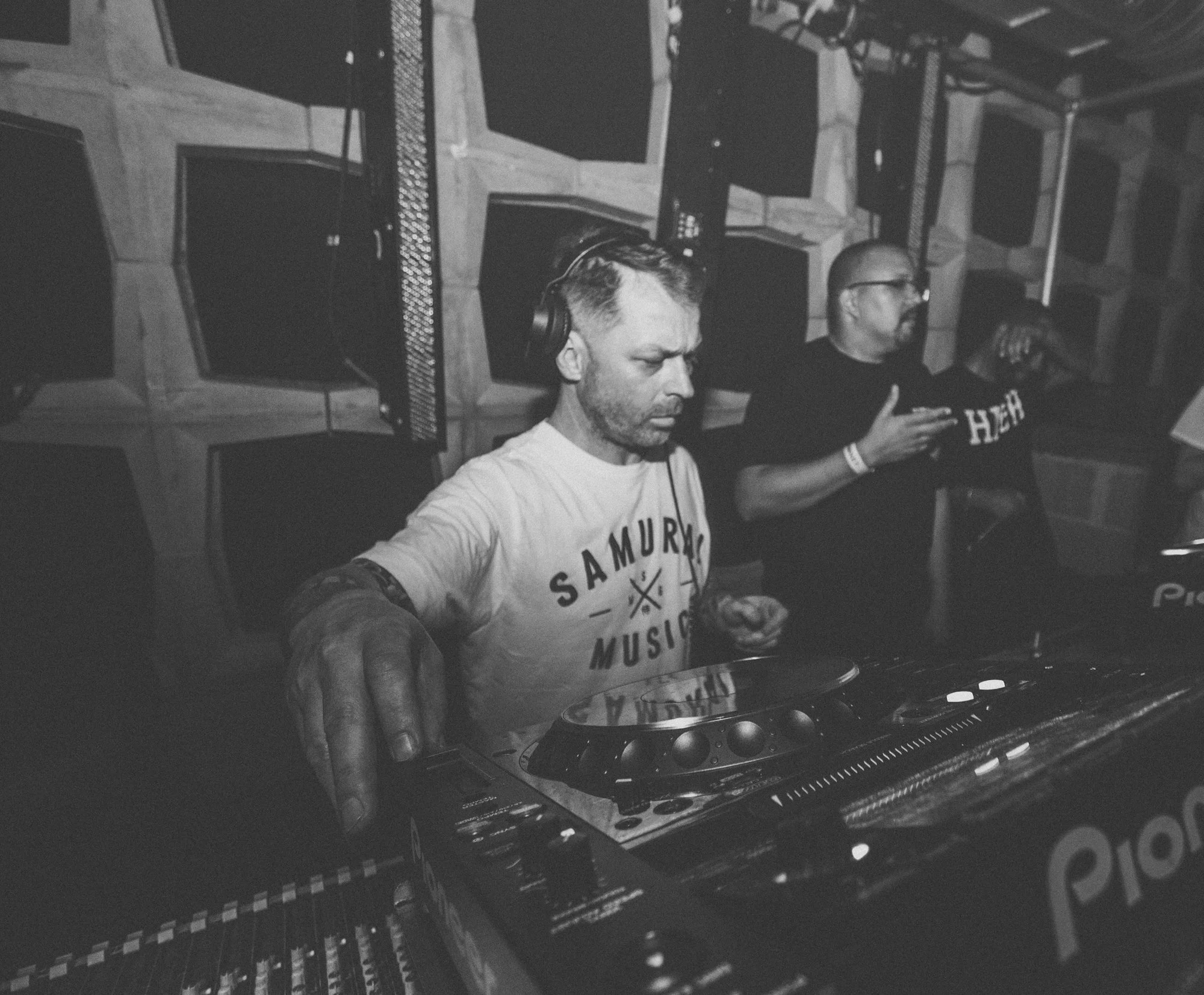
Presha & dBridge in London 2016
Moving on to Horo - When I moved to Berlin about 10 or 12 years ago, I was basically out a lot every weekend and often visiting Berghain too. ‘’ Everyone who has been a freshly new resident to the 'techno capital of Europe’ can relate including me, I share with a warming nostalgia and Geoff laughs cheekily before going to share:
‘’I was doing my thing digging records at Hard Wax and Spacehall, mixing at home, and just soaking it all in. That’s where the idea for the Horo label started forming. Samurai’s evolution since then reflects my move to Berlin and everything I absorbed here feels like a natural development. From the beginning, I was drawn to artists like Mike Parker, Donato Dozzy, and Reeko, many of whom I now work with today. I started gravitating towards these kind of techno textures applied to DnB. I had an idea early on, very early on ‘Why can't we just have this DnB kind of feel. No breakdowns, no constant peaks, just flow like techno.


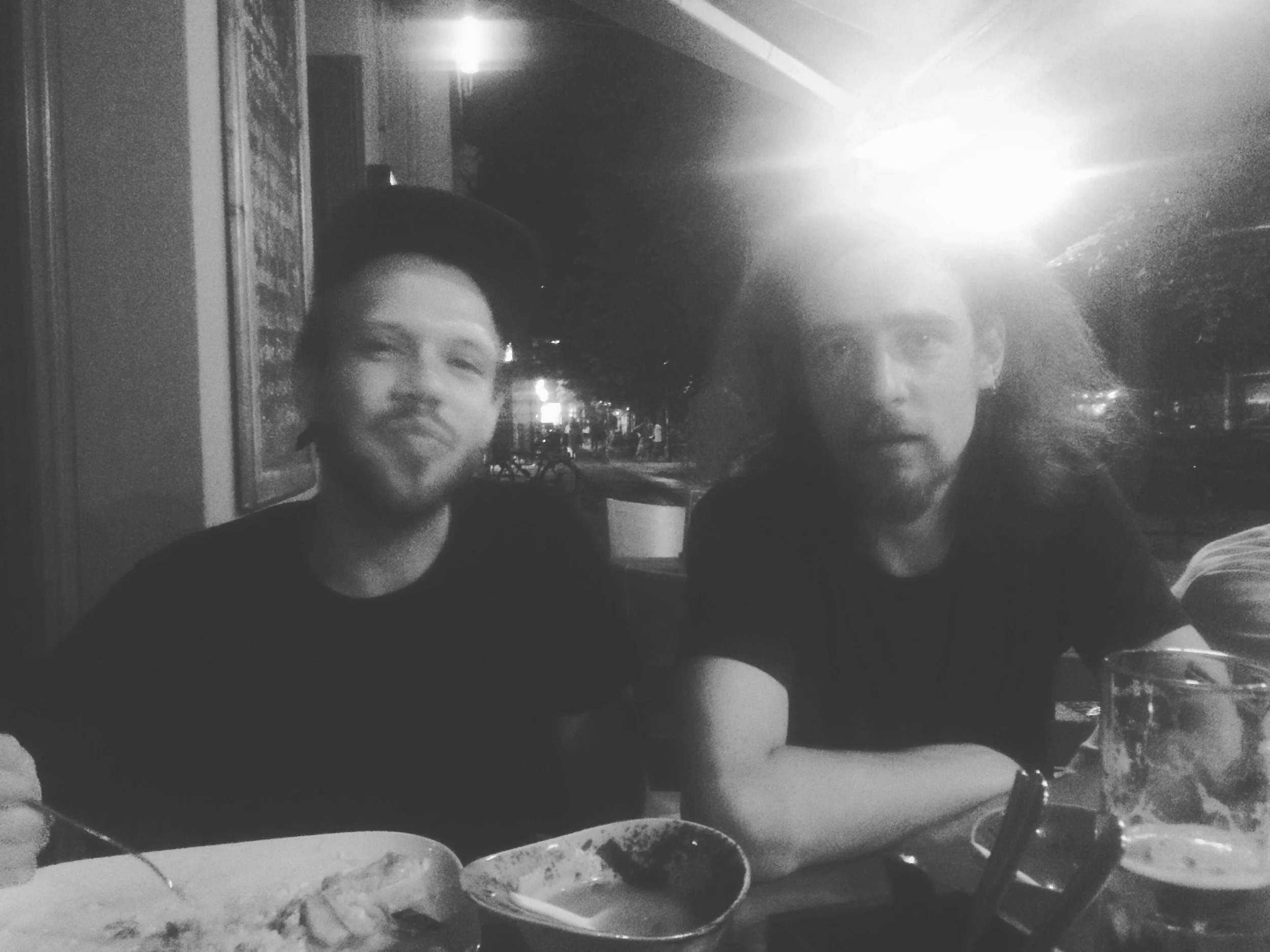
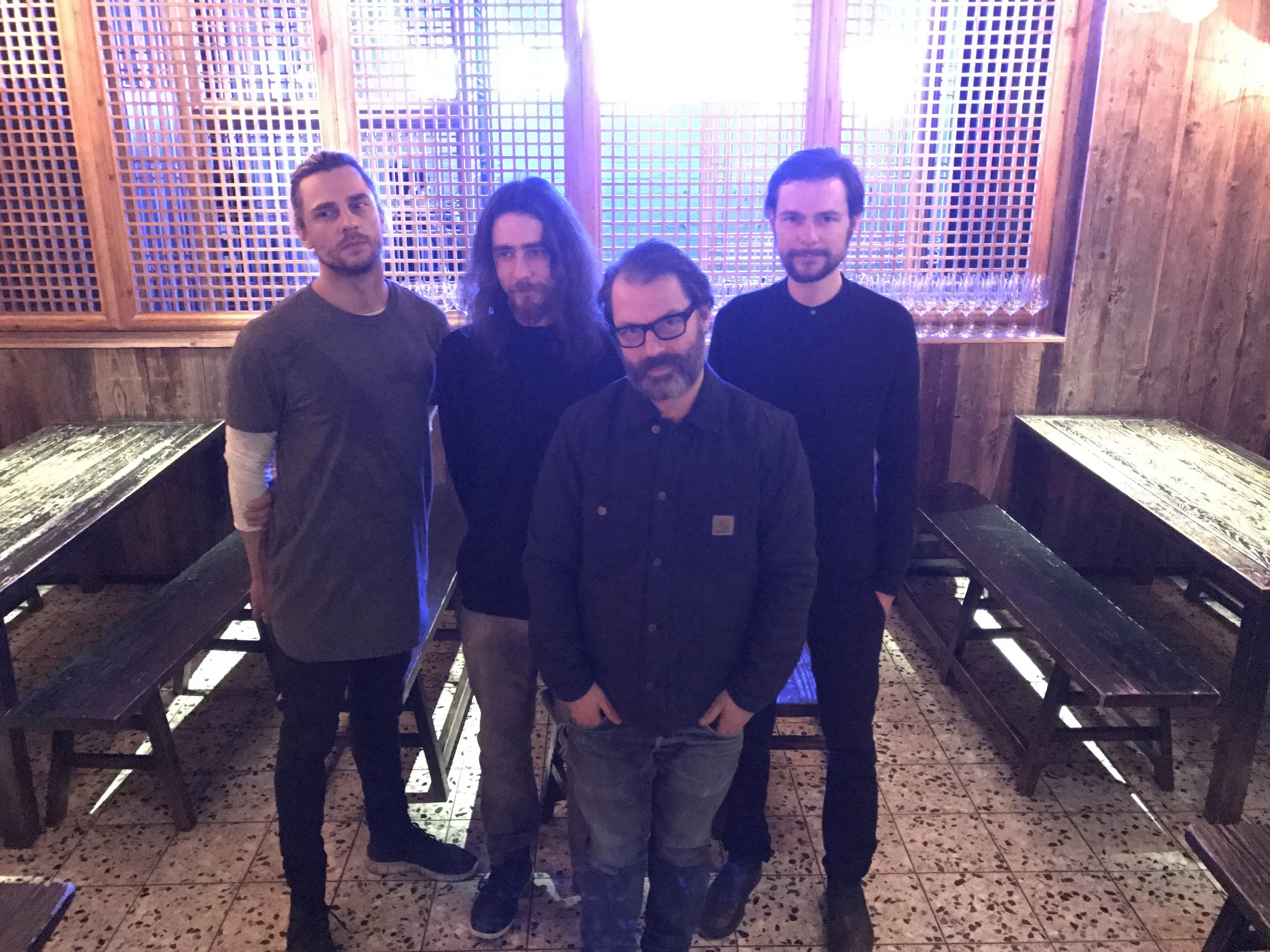
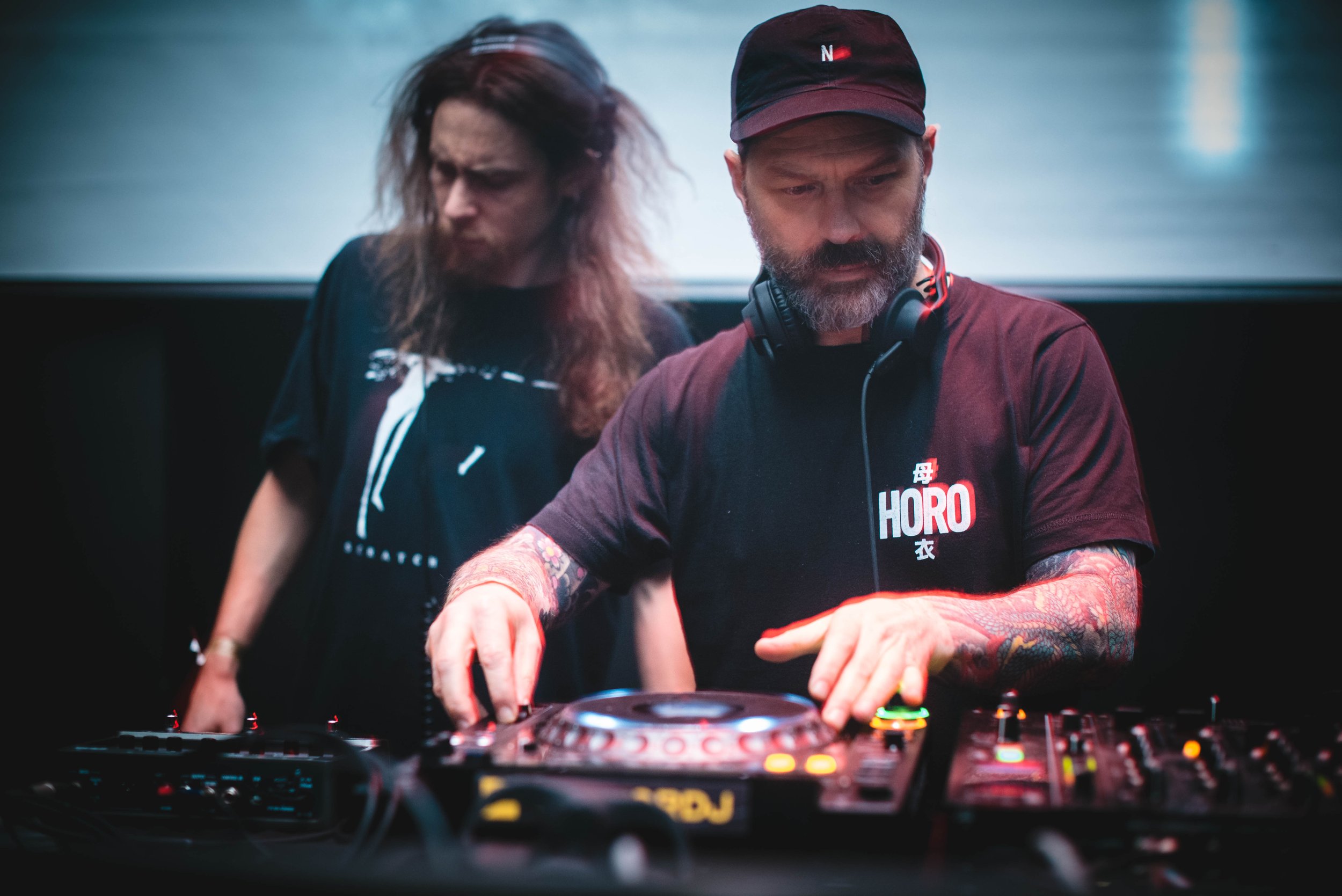
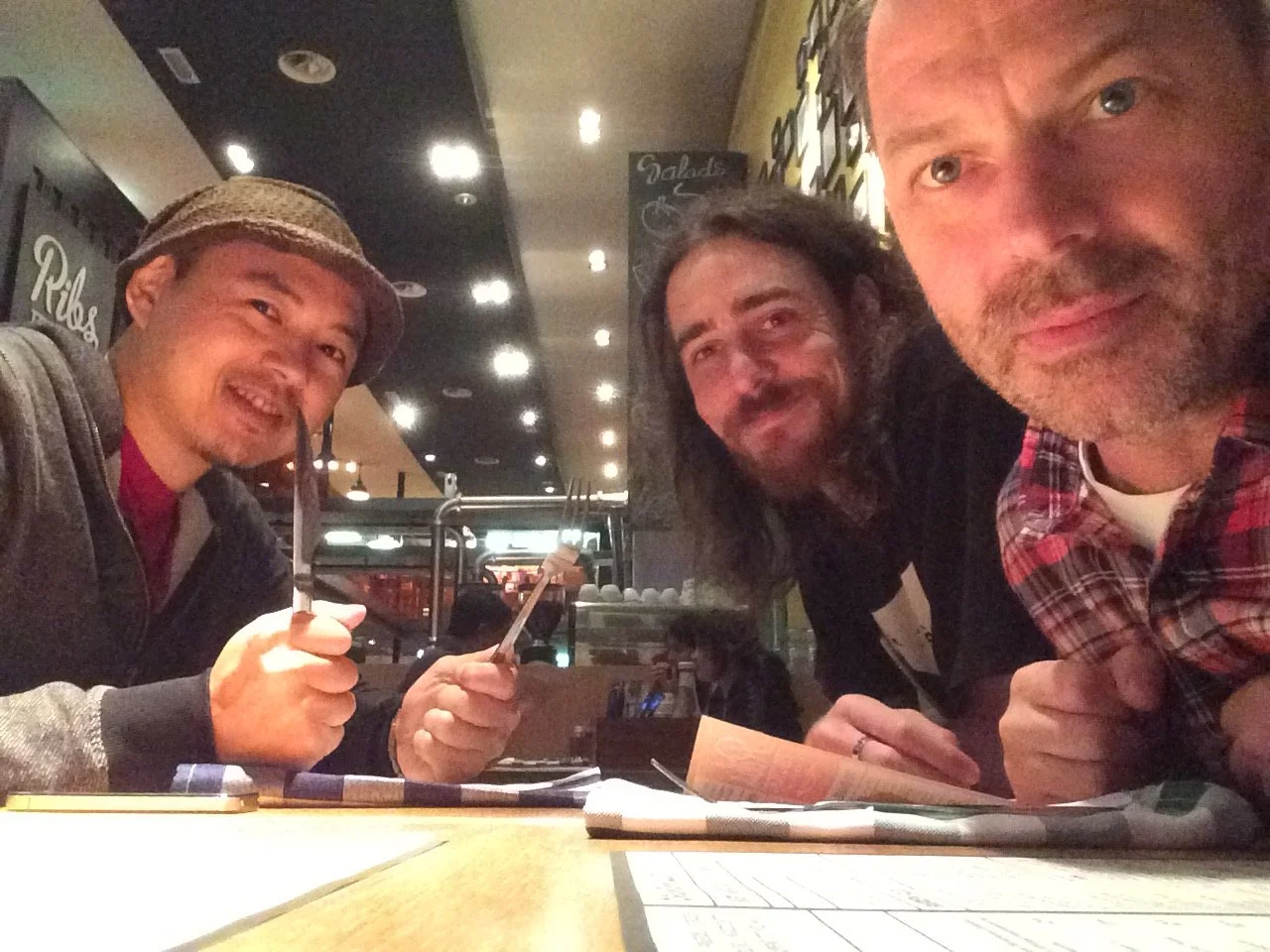
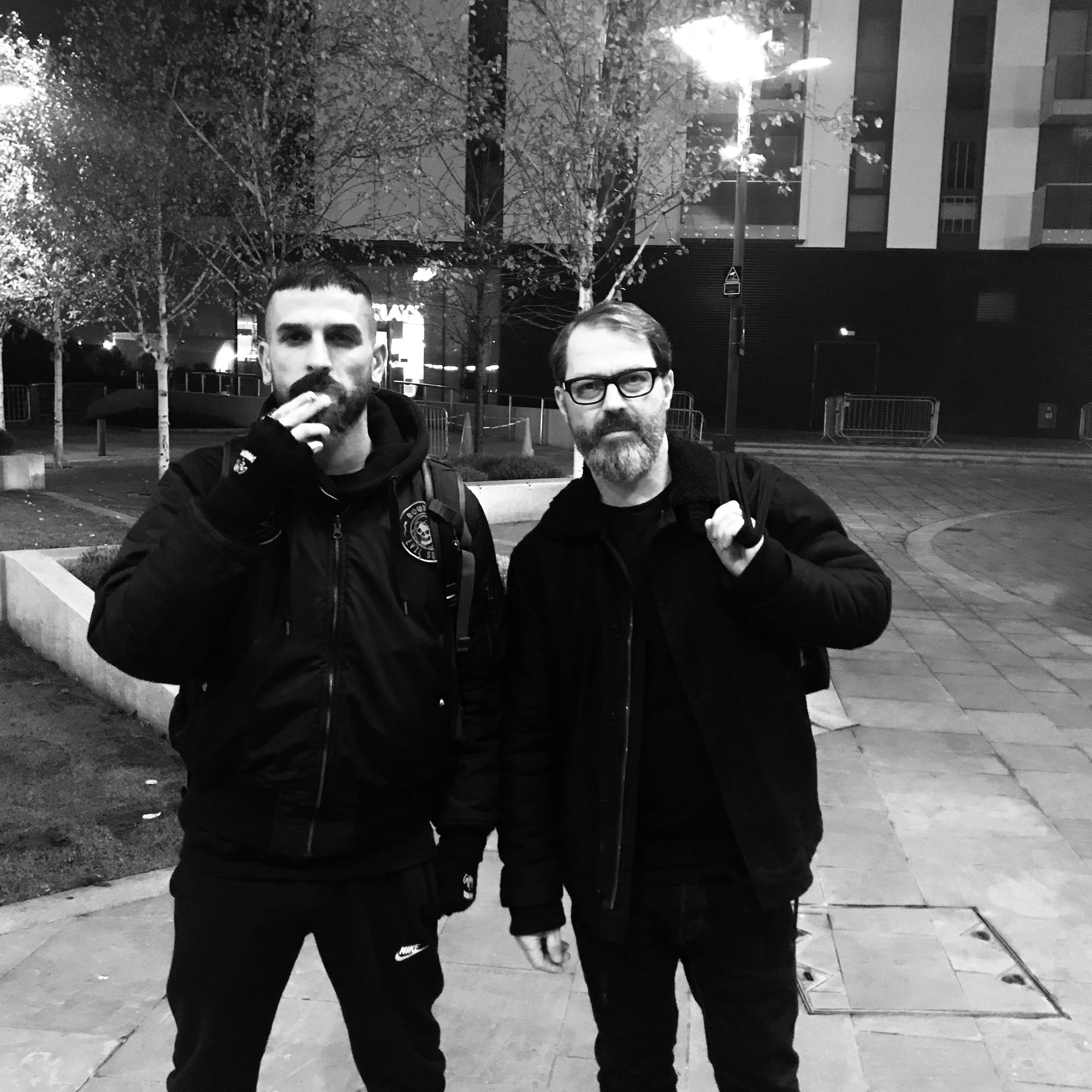
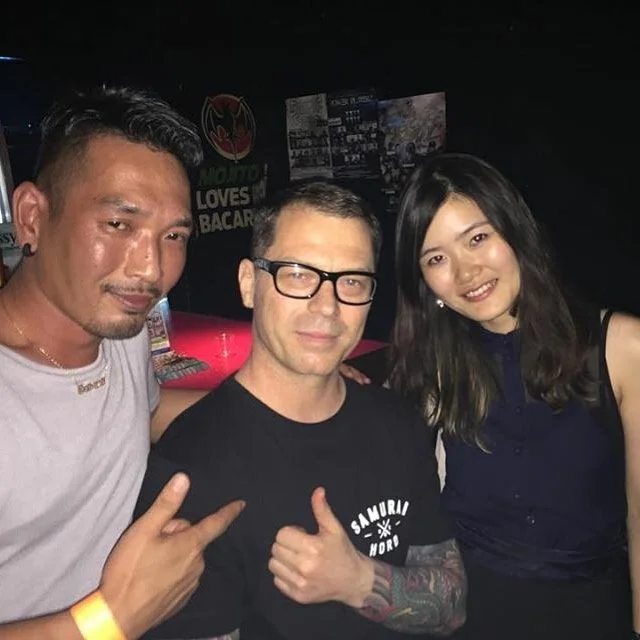
Image 1: ASC, Sam KDC, Synth Sense, Corsica 2015, Image 2: ASC & Ena at OHM Berlin 2015, Image 3: Ancestral Voices & Sam KDC post Boiler Room 2016, Image 4: Presha, Oake, Sam KDC, Grebenstein 2016, Image 5: Sam KDC & Presha at a Grey Area event in Moscow 2017, Image 6: Ena, Sam KDC and Presha somewhere in Europe 2016, Image 7: Last Life & Presha, Image 8: Presha, Goth Trad & Lynne in Tokyo 2015
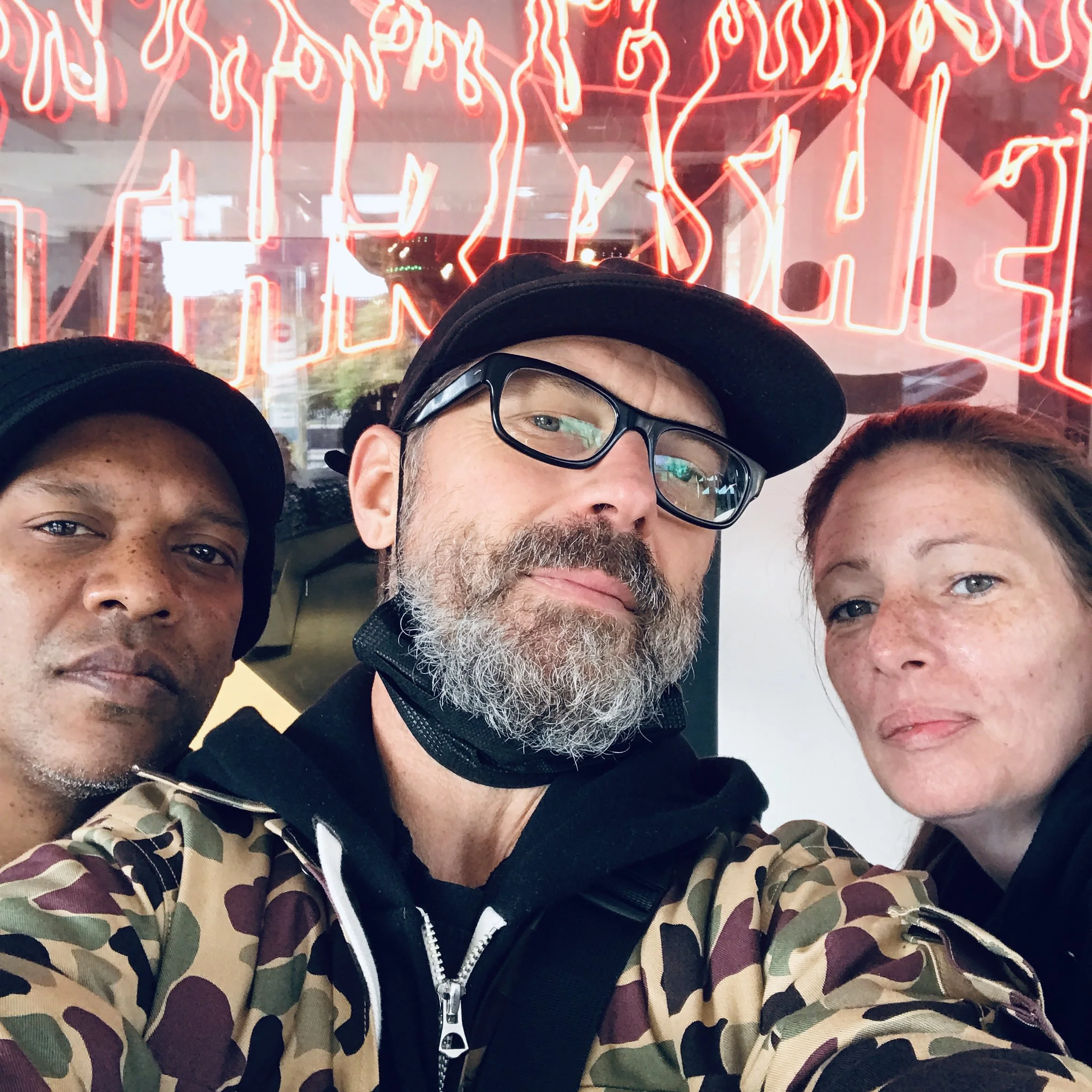
Presha & The Untouchables in 2020
‘‘It’s an interesting place to be because people are calling the newer stuff at 150-170 Techno, but it mixes with DnB, so does that make all the music we’ve put out for the last 15 years with straight kicks / half time 4/4 etc Techno now? Because we were told for years no matter what we did at those tempos, it was still DnB. Anyways, I feel like the music that I wanted back then is finally here.’’
My vision didn’t stop but back then was difficult for drum and bass producers to think in that techno realm. They always had to have peaks and lulls all through the music and intro/breakdown/drop in every tune. It's only recently that I've got enough tunes that I could really play a set with all music like that from artists like Sciama, Reeko, Last Life, Aerae, Vardae, or Sam KDC for example. Plus obviously a lot of the newer producers who are coming from a Techno background instead of DnB and their starting point is applying the Techno mixdown and structure approaches to the faster tempos. It’s an interesting place to be because people are calling the newer stuff at 150-170 Techno, but it mixes with DnB, so does that make all the music we’ve put out for the last 15 years with straight kicks / half time 4/4 etc Techno now? Because we were told for years no matter what we did at those tempos, it was still DnB. Anyways, I feel like the music that I wanted back then is finally here.’’ I am so fascinated by how well beyond his time Presha is. A true visionary! This exact fusion between techno and DnB has been coming up strongly more and more into what once was strictly ‘techno territory’. Clubs and artists that didn’t touch anything of 170 BPM years ago are now entirely submerged in playing that sound. For many who don’t know the roots of associated styles and haven’t spent time digging, it felt like the birth of a whole new unheard genre.
For me personally, it was what ‘saved or better yet freshly inspired’ me during the pandemic, because after many, many years in techno combined with witnessing the increasing consumerism of electronic music, I had started to lose a little bit of the excitement. This influx of new energy that this fusion sound brought actually restored my excitement to dig and to search and feel like I have just arrived into this world and all of it is right in front of me waiting to be discovered.
Since Geoff is in a way a pioneer and had this idea long before any of us did, I was wondering how it feels for him to now see it realized in that way? Does he feel some level of recognition coming his way for setting the foundation with his life’s work to create breeding ground for experimentation that led to it, or does he feel like he should rather ‘protect’ this world from everyone who just wants to come in now because it’s cool all of a sudden?
Legacy, continuity and change: Samurai in a new era, and a personal shift from darkness to clarity
‘’I'm not protective at all. I think it's fantastic!’’ Says Geoff with a voice trembling from excitement. ‘’At the time, I was at a creative dead end. I’d been making tributes to music I loved from the mid-90s, but didn’t know what direction to take. Then I heard a mix that had Claire (Aerae) and Vardae’s tracks in it and it was a revelation. I went on a discovery binge for a week, then contacted them immediately and just said ‘We need to do a release together. You’re making the sound I’ve been dreaming of, and I don’t know where you came from, or what influenced you, but let’s go.’ It was so refreshing. I thought I knew everyone making the music I liked. I didn’t expect to be surprised again but then this happened. It was beautiful. Maybe they've heard the stuff that we've been doing, but they have evolved everything that I wanted to hear into their own sound, and I needed to talk to them right away. I was just so happy about it.’’
The fact that the only feeling that comes to the surface here is joy speaks volumes to what a respectable person Geoff is. Instead of fueling the elitist culture of modern life by drawing lines and separating music and artists to put them into neat boxes, he acts as the bridge and facilitator for yet another emerging genre, that comes with its own cultural specifics and hungry new artists full of creative ideas and inspiration. The immense support that transpires in his voice while talking about upcoming artists who inspire him nowadays is admirable. After so many years in this industry 18 of which as a label owner and curator, still being able to have such a positive and supportive outlook goes to show what an incredible contributor and leader he is. I have rarely had the honor to speak to artists of Presha’s magnitude who still carries such pure fire and passion inside of them, let alone expressing it in such an honest and genuine way.
‘’There are so many Vardae tunes that blew my mind. It felt like he knew what I wanted to hear, and I just felt so relieved that there was going to be ‘an injection’ for me too. It’s been incredible. I've been just nonstop connecting with new people.’’ Hearing him say that, I make a link between the longevity of his presence in the scene and what it takes to keep going. Perhaps that is one of the recipes for passing successfully the 15 year mark and going strong like it has all just begun.
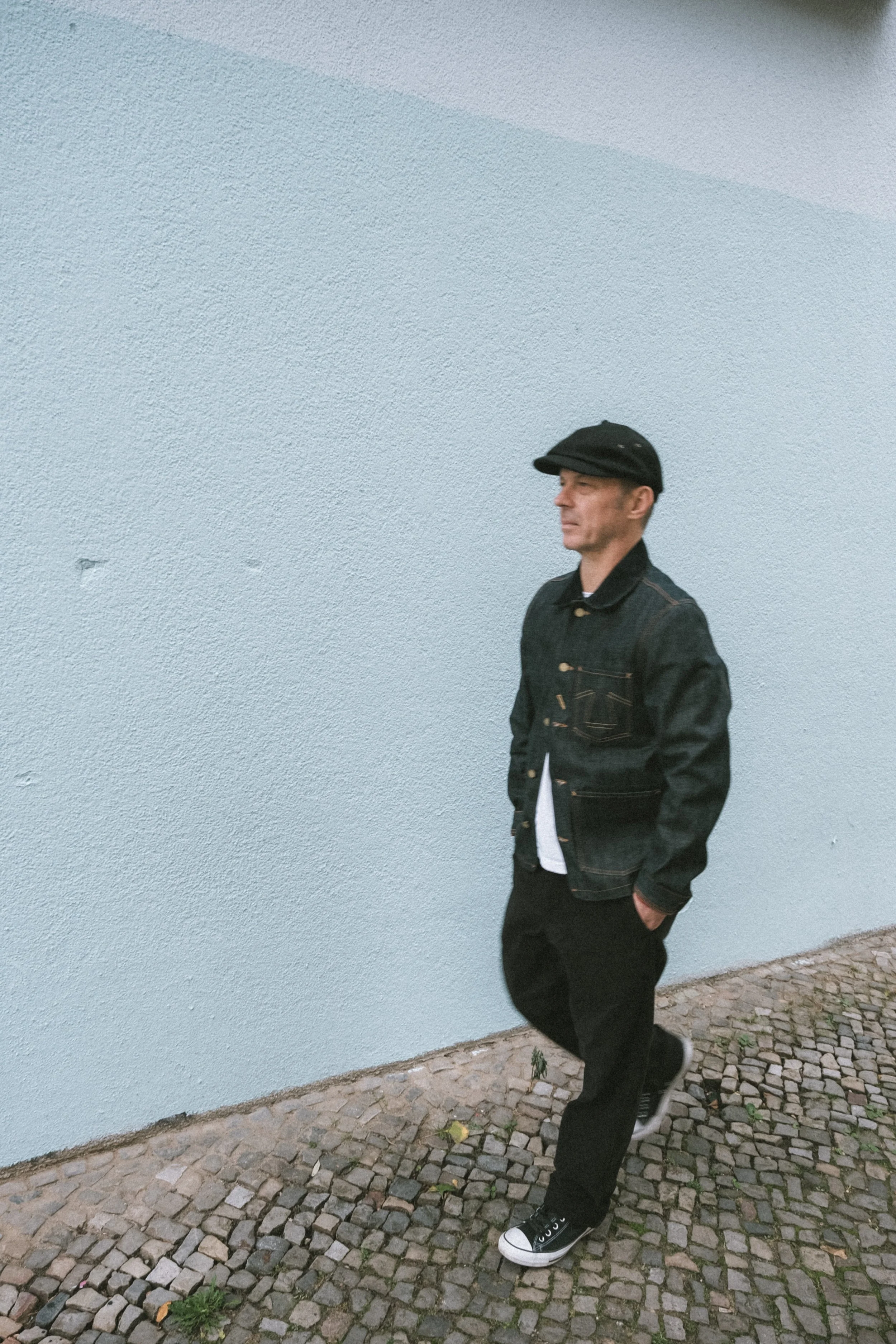
Geoff Wright, Presha 2025
‘’Absolutely! You don’t want it to feel like a slog or to just push out releases because you have to. A few years ago, I was signing things release by release with not much ahead. Now I’ve got about a year and a half of new records lined up. I've always tried to have a space in case something, someone really big goes ‘Hey, do you want to put this out?’ But I don't have any space anymore.’’ Impressive! With a serious release schedule like that, good luck to all of us collectors. Since Presha’s different visions and ideas always translated into a new label, I was curious if all of the sub labels are still active and what is their fate going to be?
‘’Not really. Red Seal existed because my distributor at the time told me I couldn’t release the really deep stuff on Samurai as it needed its own identity. Then, when I moved to Berlin, I launched Samurai Horo for the post-Autonomic sound. But eventually, the lines blurred. I gave up on separating them and everything kind of merged back into Samurai Music. I had turned Horo into a space for Grey Area and experimental techno. It’s still technically there, but I don’t feel drawn to use it anymore. Maybe I’ll do another ASC or Sam KDC record on it, but it might also be time to realize that it’s finished.’’ Having heard all about his recent inspirations, and thinking back on Horo’s catalogue, I feel like there are some releases on Samurai now that could have easily been released on Horo. The lines are blurring so much at this point.
‘’Exactly, also Horo was often very dark. I’ll be honest, I’ve lost my dark edge the past year.’’ Struck by curiosity I dig deeper to understand what he means by asking if this change was prompted by simply a preference shift in sound or something in his personal life? Geoff goes on to share: ‘’I guess it's my personal life, I’ve been closely connected with someone who is very happy and positive all the time and it washed away a lot of the dark elements and emotions in my life. But it's not just that. I just feel like I'm getting older, and I don't feel the inner resistance anymore. A lot of dark music is attached to feelings of alienation and kind of simmering discomfort for me, and I don't feel like that anymore.
I feel more comfortable in myself, and I feel more open to just embracing different kinds of sounds. If you had told me two years ago that I was going to Parallel festival and dancing so much the whole weekend, I wouldn't have believed you. I don't think any of my friends would have believed you either. I liked a lot of the darker, harder stuff when it was about me feeling like an outsider, and I don't really feel like an outsider anymore. I don't feel that disconnection that I used to. I used to have trouble facing people that would really embrace what I was doing and were being appreciative. Now it’s good, I'm happy that people like it.
I felt it at Parallel festival this year (2025). People coming to me and saying ‘Oh you are the guy from Samurai, thank you so much for the music.’ and I've met a few people like that over the past year or so that have told me about their experience with Samurai over the years. I feel good about that. In the past, I would just not be able to assimilate it. It's an imaginary kind of thing that I did to make myself justify the way the music and the imagery of the label was - kind of this eternal outsider thing. I don't feel like that anymore, and I'm very grateful people are enjoying what the label does and they are getting something from it.’’ Beautiful! It is those moments of raw honesty and vulnerability that I care about just as much as the music, and the approach. In the end it’s always about the inner worlds and battles of a person who is finding a way to express them, so that they can turn into something like music and records that can go on to influence or become relatable to others. Our essence is what drives every decision in art. For many pain and making sense of difficult emotions and dark feelings is what pushes creativity forward, but it doesn't always need to be just that. A new era for Presha and more so a new era for Samurai Music is upon us.
‘‘I’m happy in the knowledge I have created a breeding ground for other producers who have benefited artistically from the music on the label.’’
‘’Yeah, and working with people like Reeko, Mike Parker, Brendon Moeller and Donato has helped reinforce that positive wave. I’ve never really needed constant validation, because I was doing it all for myself, but when it comes from people who for me are luminaries it means something. These artists laid the groundwork for most of what exists within techno. I’m happy in the knowledge I have created a breeding ground for other producers who have benefited artistically from the music on the label. I do a lot of shaping with some people in the process, but overall I feel good about what I am doing and I am just a lot happier. I’d like to think that it’s more about the experience now.’’
Beautifully put! It’s about emotional depth and embracing contrast in life. As someone precious to me always says: ‘There is no light without dark, no fast without slow, no hard without soft, balance is where the beauty in life lies.’ Those words often echo in my mind to remind me that doing or being something different if you feel it is okay. In my eyes Presha is up there alongside his own ‘heroes’ as an equally valuable and strong contributor. What he managed to do with Samurai is simply more than a label and platform, but he also carved out a unique spot in the scene with an unmistakable identity built on strong values that has become so meaningful to many around the world. A big smile shows up on Geoff’s face as he starts replying to me:
‘’Thank you! It’s interesting how people perceive Samurai. Recently I’ve been working with an Apple Music curator on a Samurai mix series. He said something that stuck ‘Your label doesn’t sound like anyone else. It exists in its own world.’ That’s the highest compliment I could ever receive. Samurai being recognized as a type of ‘sound’.’’
The vinyl-first approach and the importance of deep and meaningful relationships
Absolutely. It’s a category of its own. Now that I understand Presha’s background better, I can really hear how the catalogue took shape. But I wonder, if he had to describe the Samurai sound to someone without referencing genres, how would he explain it as a feeling? ‘’I guess what you're talking about is the feeling I get, when for example artists send me stuff and I know it sounds like a Samurai tune. There's a subtlety that's important to me, I don’t like things that are too obvious. I don't know if you could describe the feeling, but I recognize it when it’s there! I wish I could bottle it up and give it to everyone.’’
He kind of already does it by delivering every release as a gorgeous collector’s item on a striking colorful vinyl with bespoke art. I believe that this vinyl first approach, especially realized in this way, is sharing part of the Samurai feeling in a physical form. Every time you get a record it’s the full experience. Thinking about how expensive it has gotten in 2025 to be a vinyl collector, I was wondering if Presha or his label have felt that shift on the market, especially having been in it for so long surviving all kinds of states and crashes? Is this going to be a sustainable approach for the future too?
‘’Well, I started with a small label called Subtronix Recordings back around ’99. There were no CDJ’s or digital yet, just vinyl. We’d press 3,000 to 5,000 for virtually unknown artists because that was the norm then. There weren't that many records around, and people were buying them because it was like the streaming, but with a bunch of big black discs in their house.
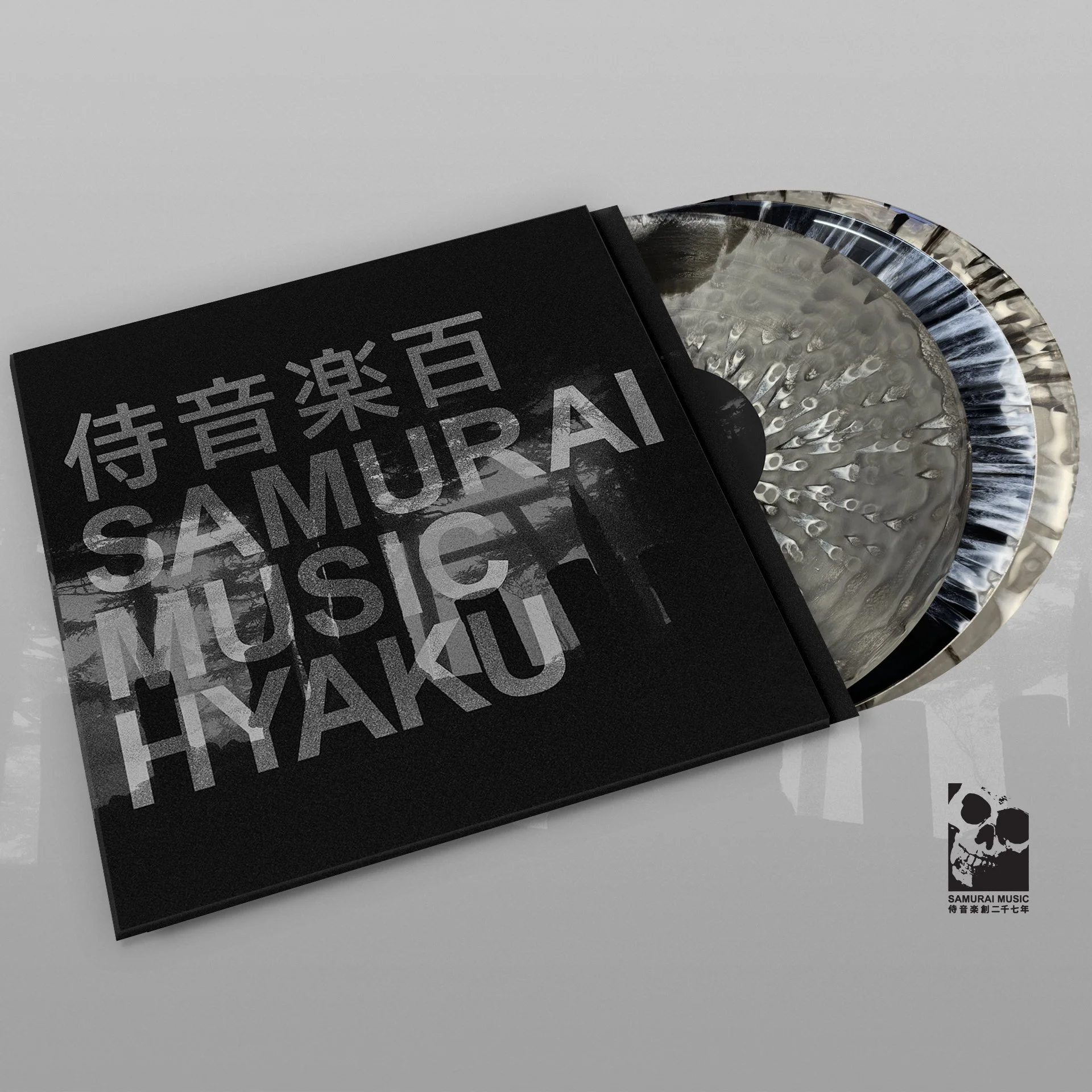


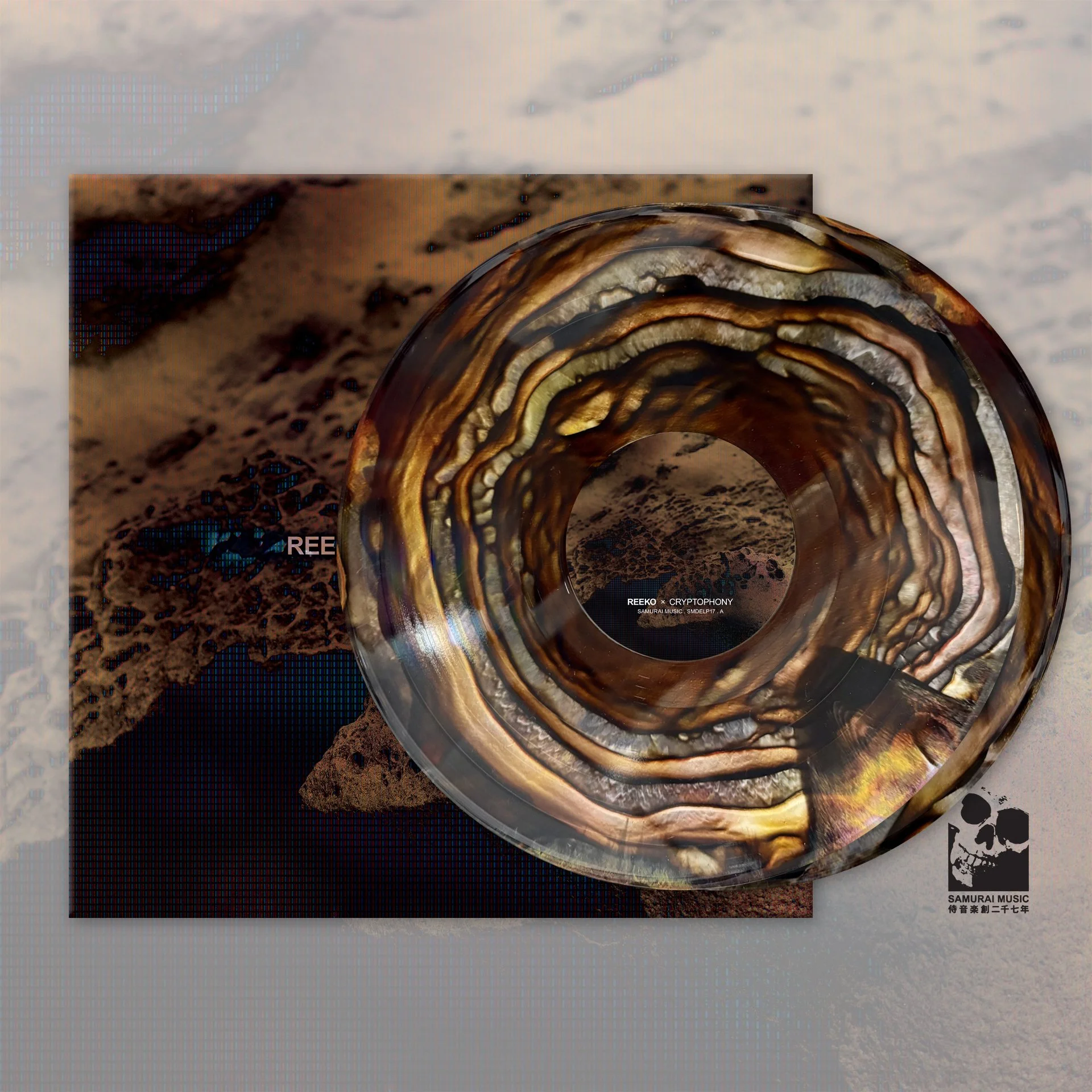
When Samurai Music started, my whole idea was trying to be different musically, but also, I went out of my way to make sure the vinyl was different too. Looking to do something interesting with it was my way to create an experience with the music. If you want people to buy a record, you have to make it worth them buying it. I like a good plain black vinyl record myself sometimes, but I think people appreciate a little bit of extra effort. If colored vinyl is not for them, all good. But for me, I think it's an extension of what it sounds like - to create something visually appealing. As far as longevity I've been asked this question over the years for over a decade, and I can tell you right now, my record sales with a few exceptions, haven't changed for, I would say, 12 years.’’ A true testament to quality and the strong community that the label has grown throughout the years.
"It’s always been about the combination of quality and appearance. People want records that look and feel good. Things slow down a bit in the summer, but overall, sales have held steady for more than a decade. The only real dip was when I put out some of the weirder Horo records, and even those eventually sold out. I hope it continues. Finding Intakt! in Berlin was a game changer. I’d always wanted to work directly with a pressing plant, and now I can - no middlemen. Being there, seeing the process and how your record is being made, giving direct feedback - that’s priceless. They’ve said my involvement helped push and elevate what they do too. It’s a proper symbiotic connection and it’s taken things in a direction I’ve always wanted to go. I’m enjoying making records more than ever right now."
‘‘When Samurai Music started, my whole idea was trying to be different musically, but also, I went out of my way to make sure the vinyl was different too. Looking to do something interesting with it was my way to create an experience with the music. It’s always been about the combination of quality and appearance.’’
What Geoff describes here is the dream scenario of every label – being able to maintain a high stock, while also going deeper into the process of vinyl production. Having gotten a faint idea of what a highly motivated and hard-working person Presha is, I am not surprised to hear that he rolled up his sleeves and entered the pressing plant. After all, who better to shape the sound of a label than the man behind it? His collaborative spirit stands out once more, but what’s most striking is how he always seems to elevate the spaces he touches. Surely, he’s able to take these insights with him into the studio, into curating, into conversation. I sincerely hope that the upcoming years will continue to be fruitful and steady in that regard.
While we’re still orbiting the world of vinyl, another thread rises to the surface. Presha’s long-standing collaboration with visual artist Ryan Quinlivan. Samurai Music, while named after the Japanese ancient warriors, carries more than a stylistic reference. Its foundation is immersed in the ethos of Bushidō - a code of honor, loyalty, discipline, and self-mastery. These values echo through the label’s every choice. Geoff demonstrates that loyalty not just through sonic curation, but also through sustained creative relationships. One of the most striking being the consistent visual identity crafted by Ryan. I wanted to know how that connection formed, and how they balance sonic mood with visual expression.
I met Ryan at the raves I was involved in around Christchurch in 95’-96’. He now lives near Raglan, one of New Zealand’s most stunning beaches, and his photography really shows it. The first release was done by someone else, but when I found out Ryan was making art, I gave him a few ideas, there was an instant click and so it began. We shared similar musical roots, and got very connected through the experience of shared discovery. Ryan’s visual interpretations of music constantly surprise me. They’re never what I expect, but they just work. Over the years, I’ve worked with some strong-willed artists, and I get that it’s hard to let go of a vision when you’ve poured so much into the music. You want someone to read your mind. But Ryan has that rare ability to translate sound into something visual, without making it obvious or predictable.’’ The classic predicament of the designer/mind-reader I say through a sigh with a smile on my face. Geoff nods in agreement and goes on:
‘’Oftentimes in that kind of situation, Ryan and I would just try to give the artist what they wanted, and by seeing it they mostly understand why it does not work.’’ Some sort of reverse psychology almost. ‘’Yeah! From all the projects I’ve done with Ryan, usually his first idea ends up being the final image. Almost 90% of the artists who initially say no to that first draft end up coming back and saying, ‘Actually, that’s amazing ‘I don’t know what I was thinking.’ There’s one artist, though, who’s very visually competent and can interpret his music himself. He’s very directive, and Ryan completely respects that. That’s ASC. He designs the artwork for his own label and really ‘sees’ his music visually.”
There is something to be said about that rare ability to ‘see’ music. I know a person who is capable of that, and I was fascinated to learn that it is in fact a real thing! Some artists describe music not only as sound, but as colour, shape or motion. A phenomenon known as synesthesia, especially the subtype chromesthesia (where sounds trigger visual experiences). According to neuroscientific research, this isn’t just a metaphor. Many synesthetes involuntarily perceive visual‑elements when hearing music, a condition linked to stronger sensory‑connectivity in the brain.
In practical terms, for an artist who “sees” their music, the creative process begins in both hearing and vision. The visuals of a track can emerge alongside the first note. It’s a rare gift, but one that underscores why sound and image can feel inseparable. ‘’I feel like music artists sometimes don't treat graphic artists as artists. They see them as an app or a tool. They have to let go of that and let them do their job. If I can give advice to music artists it will be ‘If you find a good graphic artist, let them do their job, don't interfere too much. Don't get hung up on what you think.’ ‘’ Valuable words of advice that I can only support. Art is so arbitrary, and everyone who creates gets attached to their own output, regardless of whether it's music, a painting or a photograph, and each creator’s personal feelings in that moment are unique. I wonder if Ryan and Geoff tried to take any creative risks over the years? Presha answers:
‘’I don't know what would be risky. This might be an egotistical thing, but when you have a label that has a strength of personality, like we've built up over the years, people are more open minded in general. I listen to music a thousand times before I say yes. I need to feel it in every pore. Some artists find that boring. They want instant feedback. But for me, I need to spend a week or two with it, and I have to mix it, live with it and truly feel it. Then I know. There are artists I don’t have to do that with, like Reeko for example. When he sends me a release, I know it’s done. By the time I see the artwork, the music’s already engraved in my veins. I can feel if the image fits. But for most listeners, the visual comes first, they see the image before they hear the sound.’’ I’ve always enjoyed how blurred the line is between visual and musical expression. No matter the discipline, at its core it’s all just a vessel for emotion. In the course of our conversation, it became clear to me that beyond loyalty, a need for meaningful and deep human connection is of great importance for Presha in order to co-create with others. I am curious if my hunch hits home.
‘’It sure does! If I like someone's music, I’ll talk to them, but before we get into any releases, I need to get a feel for who they are. I’ve had some bad experiences in the past, so I am cautious. Personalities don’t always align, which is okay, but now it’s important for me to align before I start working with someone. For me it's deep and meaningful for sure. I want to talk to them often about how they feel and what's inspiring them, and I always want to be sharing music with them, so that we know that we're on the same level. I'm not just some guy who says: ‘Hey, give me music. I'm going to release it and exploit you.’ Someone like Cedric (Vardae) is such a good example of connection. It was a match on a human level, and I feel like we have a common goal. I love our catch ups, and I feel like we're totally on the same vibe. That kind of thing is an important part of the process for me now, especially with the new deeper direction that I am going into. Some of the artists I’ve worked with are lifelong friends Sam (Sam KDC), James (ASC), Dom & Roland. I’ve known them since the ‘90s. I speak with Brendon Moeller daily. Even if we’ve come from different places musically, we understand each other. And now I’m building similar relationships with younger artists too yeah, I’m the old guy in the room.’’ Says Geoff through a laugh.
Merely mentioning Brendon Moeller and my heart skips a beat. Next to Reeko, Brendon’s releases on Samurai are my absolute favorite. He brings a rare experimentation to the label- His work at 170 BPM is less about speed and more about space. Through thick basslines, beautiful delays and vast atmospheres, he creates tracks that sit somewhere between dub techno’s depth and DnB's momentum. His recent ‘’Vacuum’’ and ‘’Further’’ releases on Samurai unfold like deep listening experiences. His meticulous detail here is filtered through a rhythmical intensity that demands both the dancefloor and the headphones. Geoff agrees with me and goes on to add:
‘’He's a very inspiring musician. I think electronic music producers should all really listen to Brendon, just to understand that next level production quality and inherent groove ability. We have a great relationship, and I just respect him so much for the way he makes music. I'm happy to have him on the label, and you'll be happy to hear that there's another album just sitting there waiting for me and I'm actually looking to create a new sub label soon.’’
The birth of Saibai, Presha’s aspirations and the community chapter
At the time of our conversation, around the end of summer, SAIBAI was not yet a fact, but today we are happy to be seeing the birth of that project, through two spectacular debut releases. Read on to hear how it all went down.
‘’I wondered for a while if I needed a sub label, but I wanted to go even deeper than the stuff that's on Samurai and to have a space for more organic kind music, without taking Samurai too far down. We'll see how it goes. The first two records are from Brendon and a guy who is just totally blowing my mind at the moment - Pianeti Sintetici.’’
Just when you think you’ve seen it all, and there comes Pianeti on a Samurai sub label! The Italian producer is one of the artists that I deeply respect. This year I had the incredible luck to hear him perform a live set during Monument Festival on the main stage, and I am still trying to make sense of what I experienced. He is excellent at building immersive worlds of densely layered modular synthesis, warped voices and shimmering textures. It’s music that moves the celestial. With Sibai’s focus on introspective, atmospheric electronic journeys his sonic vision and the label’s ethos align perfectly. Dancefloor urgency is blurred with rich listening space explorations. Presha continues:
‘’He’s just the loveliest guy, and it’s a true pleasure to talk and work with him. He's been so kind. I've heard the music that he has made already before our connection and it’s all really good, but what he has sent me is above and beyond. He tapped into this new sound that I was talking about. The kind of organic, deep techno influence but it's tinged with post Autonomic sound. He's just nailed it, I can’t get enough of his music work.’’
Once again Presha’s positivity and excitement about the new era of Samurai is intoxicating. I feel like I am catching him at the right moment, when energies are shifting, there is so much drive and potential, and something powerful is taking shape. What’s also beautiful to witness is how artists who seem intuitively connected like Presha and Pianeti, Vardae or Aerae eventually find their way into each other. There’s an electricity in the air, a magnetic pull that draws them onto the same path. For anyone feeling adrift, let this serve as a reminder that when things are meant to come together, they will. It only takes one spark!
‘’Yeah, brilliant! Saibai label is literally coming about because Pianeti sent me his music and I was like ‘I don't know if I can go this deep on Samurai, but I need to put this guy's music out, because it's so incredible!’’
Once we got into it, he sent me more tunes and some of them are more Samurai tunes. Then I thought ‘Hey, let's get Brendon involved, because his music already fits with that, you know?’. The reality is that I've got so many Brendon tunes to put out, that I've got to find more places to put them, or a separate sub label only for him.’’ Says Geoff while laughing and goes on to add ‘’I can do the same with Sciama. He is another guy who has just made so much insane music, and there will be a Sciama album on Samurai too.’’ Yet another perfect match! Sciama’s sound unfolds in layers of textured rhythm and spacious darkness filtering jungle’s pulse through the lens of minimalism and introspection. It fits seamlessly with the ethos of the label - uncompromising, immersive and rooted in deeper listening rather than impact only. Since he has already appeared on Samurai, I was curious how has the experience of working with him been?
‘’Sciama was someone I had been aware of for a long time and watched develop from a distance. He was one of the very few artists who truly understood the essence of Grey Area - not just as deep, dark drum & bass, but as something more mechanical, textural and hybrid in nature. Sciama and Lemna were the only two producers I felt really got Grey Area outside of us. Over time, I began hearing more and more of his newer material through mutual connections, and it was clear that his sound had evolved in a direction that aligned closely with Samurai. When we eventually connected, he shared a large body of work that immediately stood out. It captured that brooding, techno-informed drum & bass aesthetic in a way that felt both natural and fully formed. We began working together from there, starting with the Between The Veils EP, which I’m very proud of. It marked the beginning of a deeper collaboration, and there’s much more to come.’’
Loud and clear! From now on we will keep our eyes peeled and anticipate all the aforementioned exciting releases. Having progressed quite a lot into our chat, I realize that we have not yet discussed Presha’s producer career. I wonder where he stands now, and whether being a producer is equally important to him as being a mentor, a label owner and a DJ?
‘‘I enjoy DJing more than producing, though my biggest passion is really the label putting records together and building the community around Samurai.’’
‘’I’ve always really considered myself a DJ first and foremost. Producing came a bit later for me. I’d always had a studio at home, but it was working with Sam KDC on our DinT project that really pushed me to finish things. Sam helped with engineering and encouraged me to actually release some music. I still enjoy DJing more than producing, though my biggest passion is really the label putting records together and building the community around Samurai. The music I’ve released so far was largely a kind of tribute to the mid- and late-90s sound I grew up with very sample-based, break-driven music. I made it mainly for my DJ sets because at the time I felt that sound wasn’t really being made anymore.
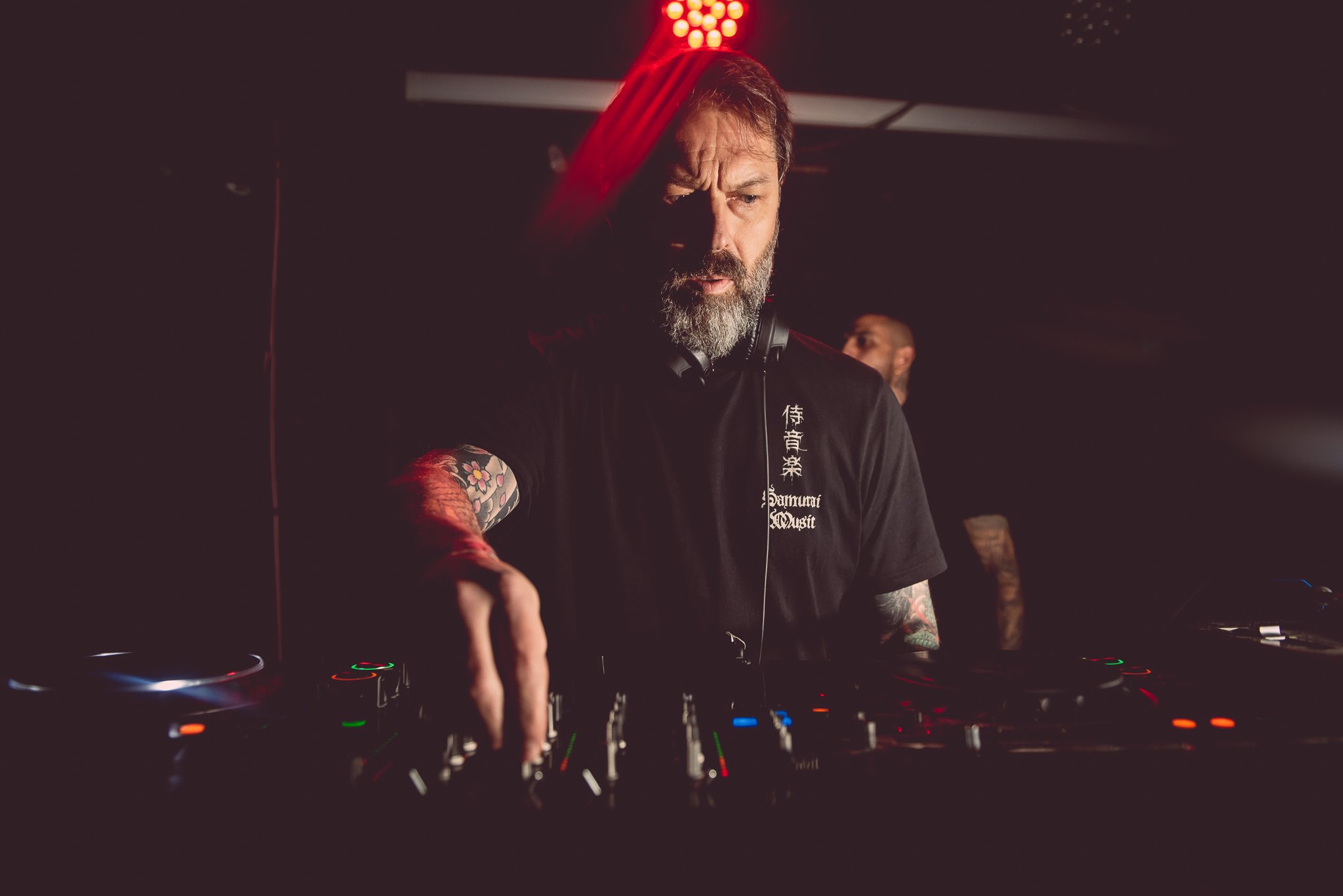
Presha in Manchester 2019, Photography: Miriam Vaughan
But I don’t feel a strong urge to keep making that kind of music now, and I’m not entirely sure what direction I’d want to go in instead. So at the moment I’d say I’m in a bit of a rest period creatively. There’s already so much incredible music out there - when I hear artists like Reeko, Sciama, Vardae or Aerae, I sometimes wonder what I could really add to that conversation. I also think producing requires a level of daily immersion that I don’t currently have space for. Claire, for example, is in Ableton sketching ideas every day, and I really admire that dedication. My own time is largely consumed by running the labels. There are six or seven projects I’m managing and if I stepped away from that to focus fully on producing, the whole ecosystem might slow down. So for now I’d rather wait for the right ideas to come along naturally. When they do, I’d probably prefer to develop them through collaborations rather than trying to force myself back into a full-time producer’’
Fair enough, it's a respectable decision! Pushing a creative activity that does not come naturally is never a good idea, and knowing where your strengths and talents lie is a valuable perspective to have. Presha’s talents as a connector and facilitator are truly unique, and the scene and many artists can benefit greatly from that. A real and sincere contribution and a push towards greatness from one of the greats! Having mentioned his love for creating a community around the label, I am curious if that means that Samurai club nights and events will return?
‘‘It’s now this new music that's made it exciting for me to think about doing it again. I’d been waiting for the right time to put on parties again and as we started at OHM years ago, we will be returning there. It’s still the perfect place for us.’’
‘’Starting up again in October! It's just slowly coming together. I think the problem for me with events is that it's a hassle - emotional and physical roller coaster, especially when you're dealing with a niche kind of music, it can go either way. When you're so passionate about everything and it's your label it's just hard to become surgical about putting on an event. I used to do them, but it got quite hard towards the end. It’s now this new music that's made it exciting for me to think about doing it again. I’d been waiting for the right time to put on parties again and as we started at OHM years ago, we will be returning there. It’s still the perfect place for us.’’
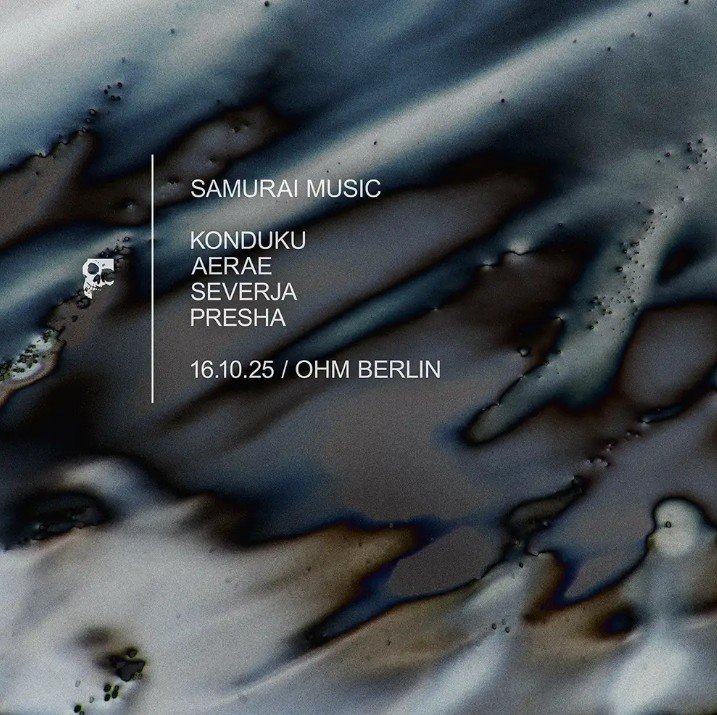
Samurai Music Showcase at OHM in Berlin October 2025
I could not agree more. For me, that is one of the most authentic and special clubs in Berlin. It’s a space that celebrates forward-thinking promoters, who dare to risk and to fulfill their musical visions regardless of the demands of the crowd. Fast forward to today, the event was in fact a huge success. With a stacked line up of Presha, Severja, Konduku (DnB set) and Aerae, Samurai launched the first experiential chapter. With more to come, I hope that Geoff will be able to take Samurai and bring it to The Netherlands too. Geoff goes on to share more on the topic:
‘’I think it's good being in Berlin, because a lot of the people who I feel are the more interesting people that aren't on my label actually live here as well. Marco Shuttle for example. He is someone that I've been talking about doing a Samurai release for a little while. Hopefully that's going to come to fruition.I hope it could turn into a series of events. Obviously, I'd love to have Reeko as I don't think he's played a DnB set in Berlin yet, but I will say that Berlin is less open minded nowadays.
When we first started gigs, it was wide open musically, and I feel like it's a lot more closed off in the city now. So hopefully we do okay here and be able to take it to other cities. I'm not one of these people who wants to push it too hard, but I think we've got a broad base of people in different cities around Europe now that we could do something interesting together. I went to Positive Education festival this year, and seeing Claire (Aerae) play a DnB set there and people going crazy about it inspired me to get back to events too.’’
I can only encourage him to follow through with these plans! Being on the other side of the coin as a visitor, I seek places that can offer me a wider range of music, which does not always match the business strategies of clubs, who book a line up based on ticket sales instead of artistic value. Honestly it is hard to find such places, and I know I am not alone in longing for it. I think Presha is onto something with restarting this exactly now when there is such a huge influx of musical inspiration. A small note for you dear readers, today, at the time of publishing of this story the Marco Shuttle Release on Samurai Music is actually a fact, alongside a new LP from Brendon Moeller and Brendon and ASC on Saibai. It is impressive how fast the label is growing and shaping to be a staple in this genre. This is the moment where Geoff shares some of the upcoming releases:
’’We’re excited to release the first Mike Parker LP for 13 years as well as new music coming from Vardae (a new EP and then a larger project), Pianeti Sintetici (his Samurai debut), the Sciama LP, plus new music from Pugilist, Ruff Cherry, Decoder, The Untouchables, Eusebeia, Last Life, Aerae, much more Brendon Moeller and probably even more by the time you read this.’’ This is a hell of a release schedule, and so much quality music coming our way.
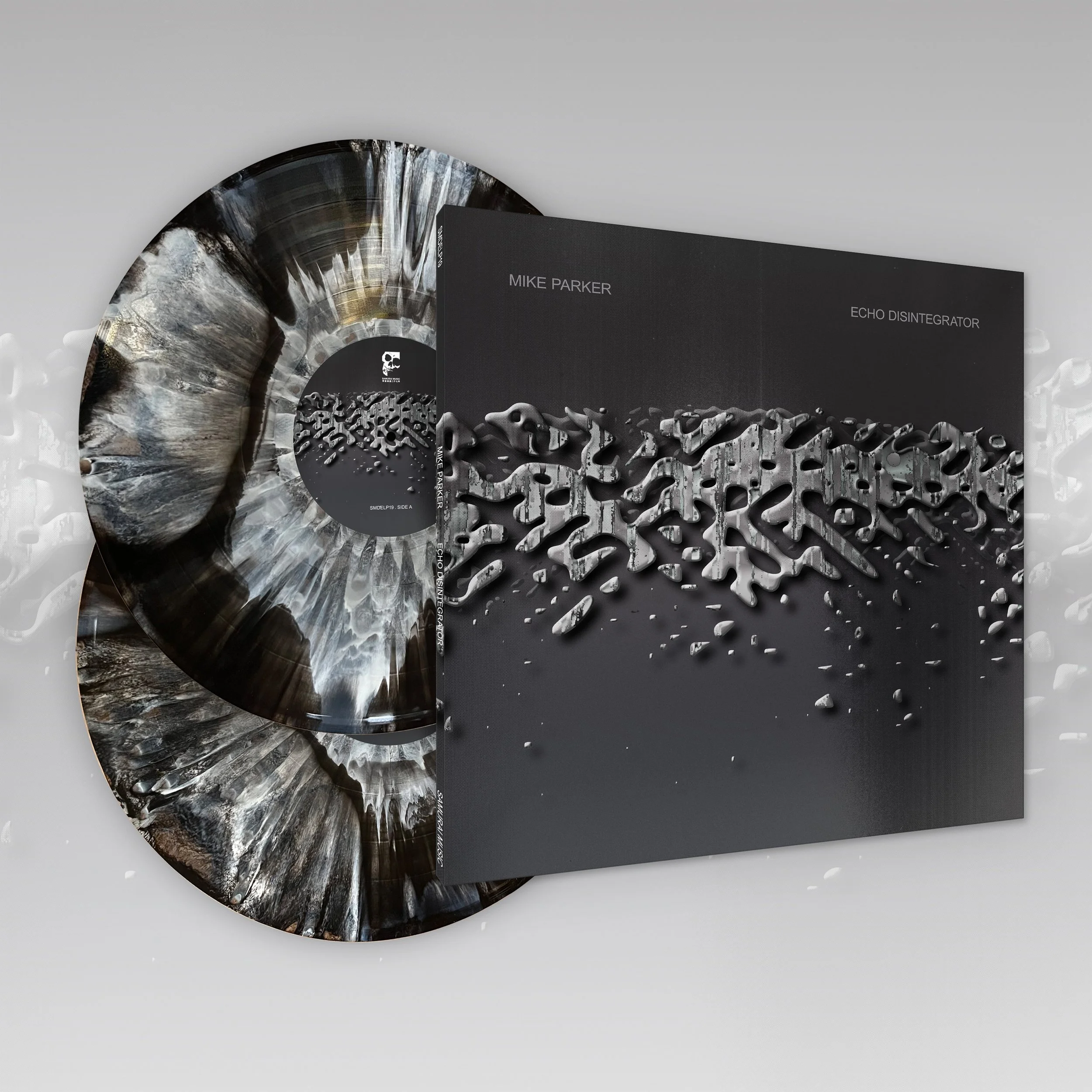
Forthcoming Mike Parker – Echo Disintegrator [SMDELP19] Pre-orders are now live via Bandcamp.
Full circle and an outlook to the future through the eyes of the community
In the beginning of our chat, he briefly mentioned to me that his Berlin days might be numbered, and now he indicated a slight frustration about how closed off musically the scene feels there, I couldn’t help but wonder if the end of the Berlin chapter is in sight? Geoff goes on to reflect and share:
‘’I've had two periods of inspiration - the mid-90s when Drum and Bass was being born, it gave me this big rush of energy. It gave me 20 years of inspiration to do what I was doing. Then when I moved to Berlin, I got that again. I was here around 2010-2011 and the techno scene here was just so inspiring. Moving to Europe was such a big change for me, because I am not sure if people understand how isolated and far away New Zealand is. Here having all the stuff at your fingertips and being able to personally hang out with the people that you put out records by and go and experience the music - that’s just the best setting. All that has been coded into my bones and made me able to translate it into what comes out of the label. I've got so much out of being here, and it's really inspiring. Now I don’t go out very often, but I can still walk into Hard Wax and get that charge again, even though it's in a different building now. I remember when I used to first go there, when I first moved here. I was really scared of all the guys. I still get this kind of butterflies, this authentic kind of charge. I'm here, you know, this is the right place, and this is their passion and love for vinyl, and it oozes out of the air in there. That’s something that I need to be reminded of every now and then, because when it's your job, it can become like a job. When you feel this intensity, this aura that comes from being inside somewhere like Hard Wax, you vindicate yourself for what you do. You know it’s important. You know this is such a cultural icon, and it’s so important what Berlin has been to me. I don't know if it all continues to be that, but definitely it's given me the charge that I needed.’’
I feel so happy when I can so vividly relate to these words. Those feelings of being in the thick of it, and truly feeling like you are part of a legendary place is so great. I wish that to everyone one way or another! My vinyl love had already begun long before I made the move to Berlin, but it unfolded there and I grew a collection by being a regular at record stores week in and week out, digging, checking and learning about artists and labels. One of the most special periods in my personal musical history as well. Geoff smiles and adds:
‘‘Moving to Europe was such a big change for me, because I am not sure if people understand how isolated and far away New Zealand is. Here having all the stuff at your fingertips and being able to personally hang out with the people that you put out records by and go and experience the music - that’s just the best setting. All that has been coded into my bones and made me able to translate it into what comes out of the label.’’
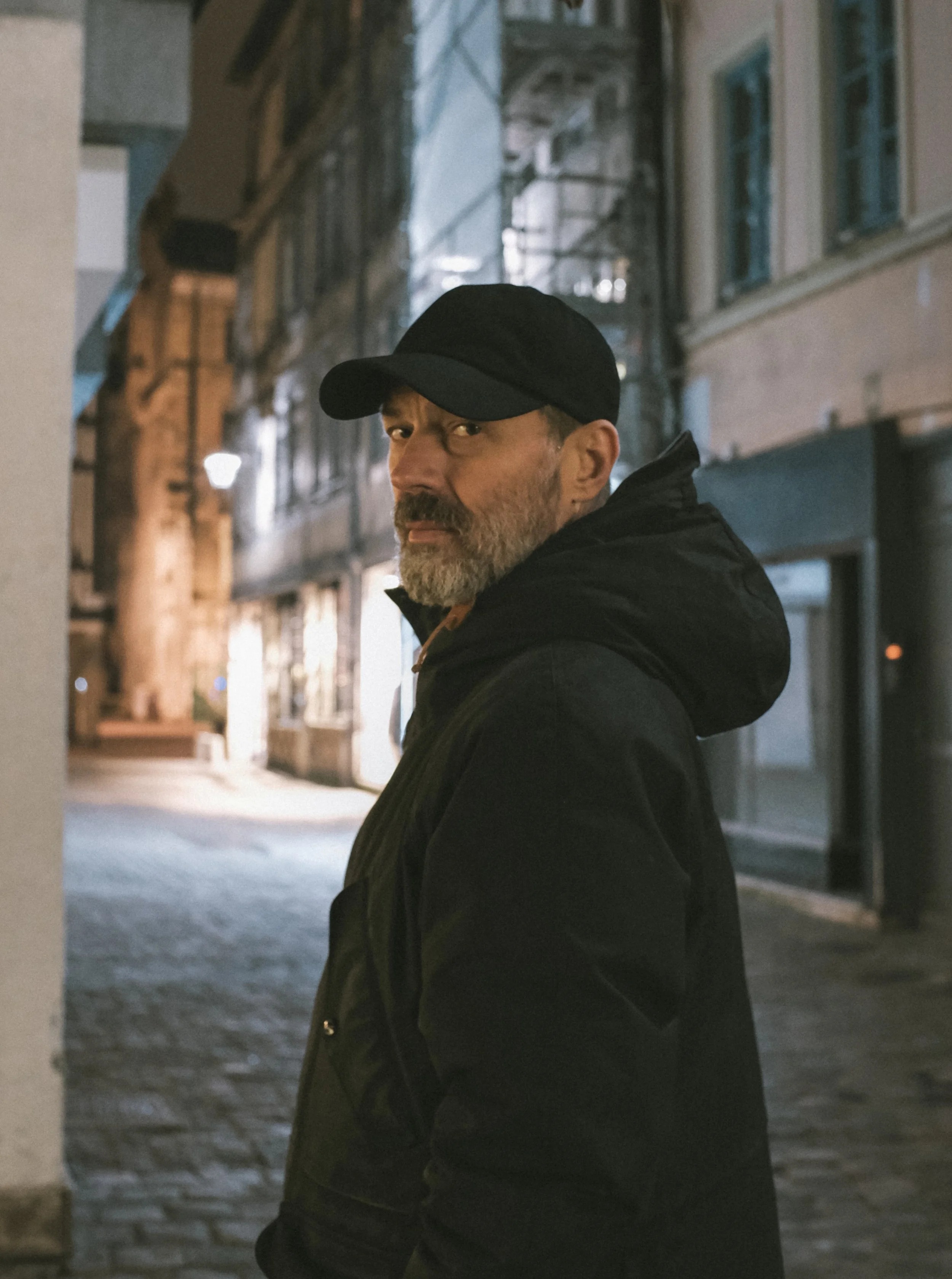
Presha 2025
‘’When you've been in Berlin for a long time you feel the essence of the city is around you all the time. I almost don't need to go to the clubs anymore, because I feel what’s around me here. Nowadays, if I walk into Berghain, I feel like I’ve never left.’’ That’s definitely true. The essence of the city is all around, though I must say that with the change of generations on the dancefloor, the spaces take on a different vibe and shape too. It can still feel warmly familiar, but at the same time oddly different? Nevertheless, it’s impressive how preserved and respected electronic music culture is there. A thought strikes me at that moment, what if Presha ended up settling down in the UK instead of Berlin?
‘’That nearly happened! I was originally aiming to move to the UK, but I couldn't get a visa. The easiest place for me to get a visa was Germany, and it was the right thing to happen in the end, because I do not know what Samurai would have been without Berlin.’’ Funny how life is, innit? In those moments when things that we want don’t work out, we can feel disappointment, but in the end, life twists and turns to bring you to where you were supposed to be all along.
I did not realize when two and a half hours flew by! Presha is one of those people who have a lifetime of interesting stories and experiences to speak of, and it feels like you can talk to them forever. I am so grateful that he took time to share Samurai’s story with me and give me a peek into who he is as a person. To close off this amazing experience I ask him to think towards the future through the eyes of his community. In 10 years or more, what would he want people to see Samurai as?
‘’I want them to realize that it's not just a bunch of tunes put out. There's a lot of feeling and care put into what Samurai does, and I always want it to have its own identity. I don't think there's another label like Samurai, and I think that's going to be self-evident to people that just investigate it. I hope it stays that way. It's more than the sum of its parts - it is a whole. It’s a little crazy for me. Recently I was talking to Reeko, and he was saying to me ‘Wow. I went through the whole catalog of Samurai Geoff, and I have to say, what an incredible journey this whole thing's been!’ And for me that's just perfect. Someone of Reeko’s heritage and stature would take the time to actually go over and educate himself on a 18 year old label and really take it all in and come to a conclusion like that about it means a lot. I feel very honored hearing him say that. That’s something that I would wish for people to do: take the time and listen to it and experience what it's become over the years.’’
I agree! Let the music and the art tell the story of the past, present and hint at the future. I could understand how special it is to hear such words of recognition by someone who you have worked with side by side for years, can be emotional and touching. Sometimes when you're in the thick of it, creating and experiencing, and being too deep into the work and process, time is the only thing that can give you that perspective. To look back on everything and truly see the magnitude of all the effort and passion that has been poured in, and more so the impact that it still has.
I love this kind of retrospect, if I can call it this way. This is also what I'm hoping to achieve with my platform, by telling the stories of labels and artists in such a detailed way. A living archive of stories, which is not just for the people who are portrayed here, but also for everyone who loves to read it. It’s the perfect moment to wrap up the conversation, so I bid Geoff adieu and thank him for this incredible experience.
The story here is not just about a successful and influential music label. The story is about a man with ambition and passion, who kept discovering, trying and connecting. It is the story of someone with immeasurable love and passion for music, a vision and an open mind and heart, ready to create but also to receive. Someone who didn’t stand still and grabbed opportunities even when they were an ocean away. It’s been an honor being able to tell that story, and I hope you enjoyed it too dear readers. As always there is a treat for everyone - a set specifically recorded for this feature showcasing the essence of the label and with you as the audience in mind. Press play and enjoy!
By the way, the next opportunity to hear Presha’s selections will be at Mostra Festival in Barcelona, where he joins Aerae for a special b2b set. Taking place from 12–15 March, the renowned Spanish festival celebrates its fifth edition in 2026, gathering music heads from around the world who share a curiosity for the deeper and more exploratory corners of electronic music. Known for its carefully considered curation and intimate format, Mostra continues to focus on avant-garde and experimental electronic music and forward-thinking artists across the global scene. Those attending can catch Presha b2b Aerae on Sunday, 15 March, during the festival’s closing chapter “The Grand Finale.”
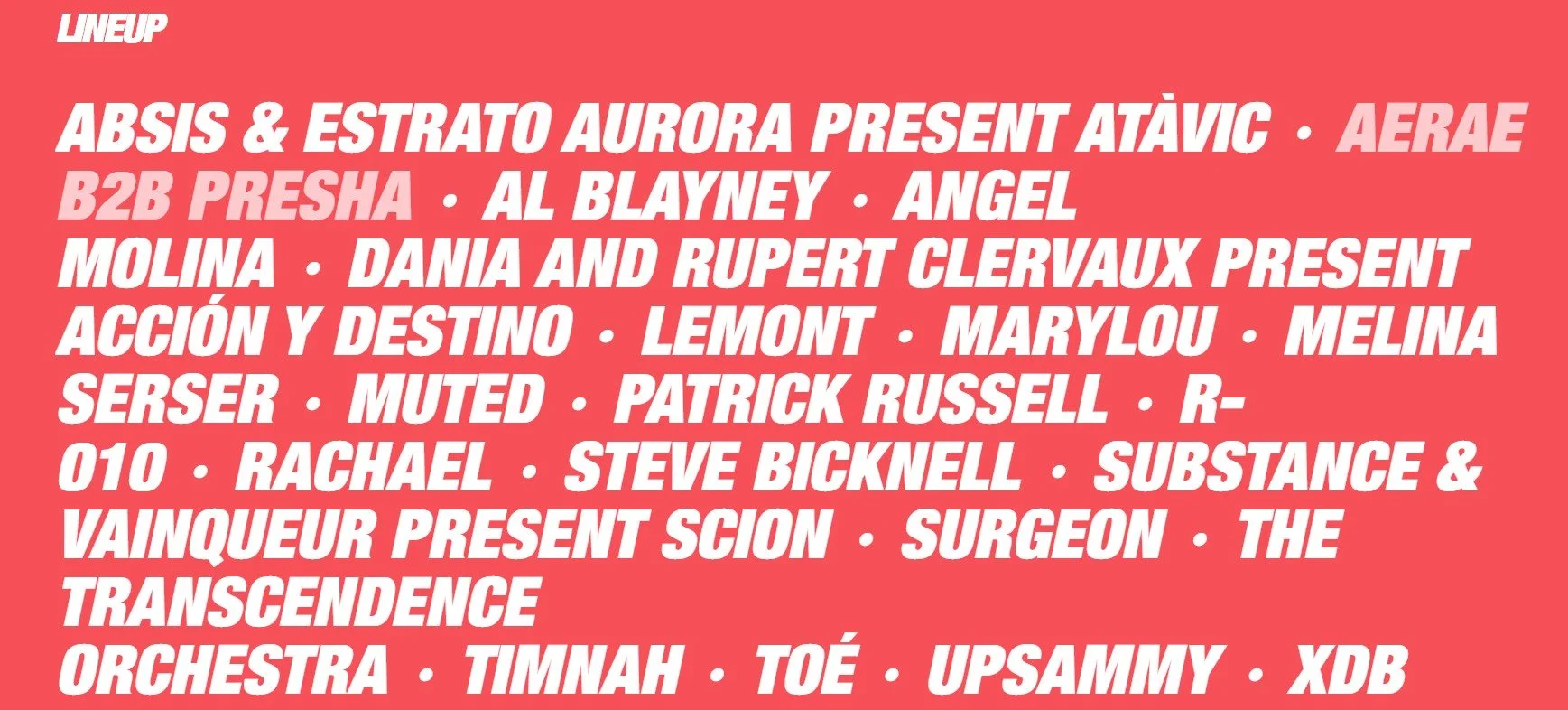
Mostra Festival 2026